Company Profile
About UsCareers
Job OpeningsHead Office
Gedung Pegadaian Kenari Lantai 4
Jl. Salemba Raya No.2, Kel. Kenari,
Kec. Senen, Kota Jakarta Pusat 10430
Copyright © 2026 PT Pesonna Optima Jasa. All Rights Reserved.
Follow Us
Gedung Pegadaian Kenari Lantai 4
Jl. Salemba Raya No.2, Kel. Kenari,
Kec. Senen, Kota Jakarta Pusat 10430
 November 23, 2026
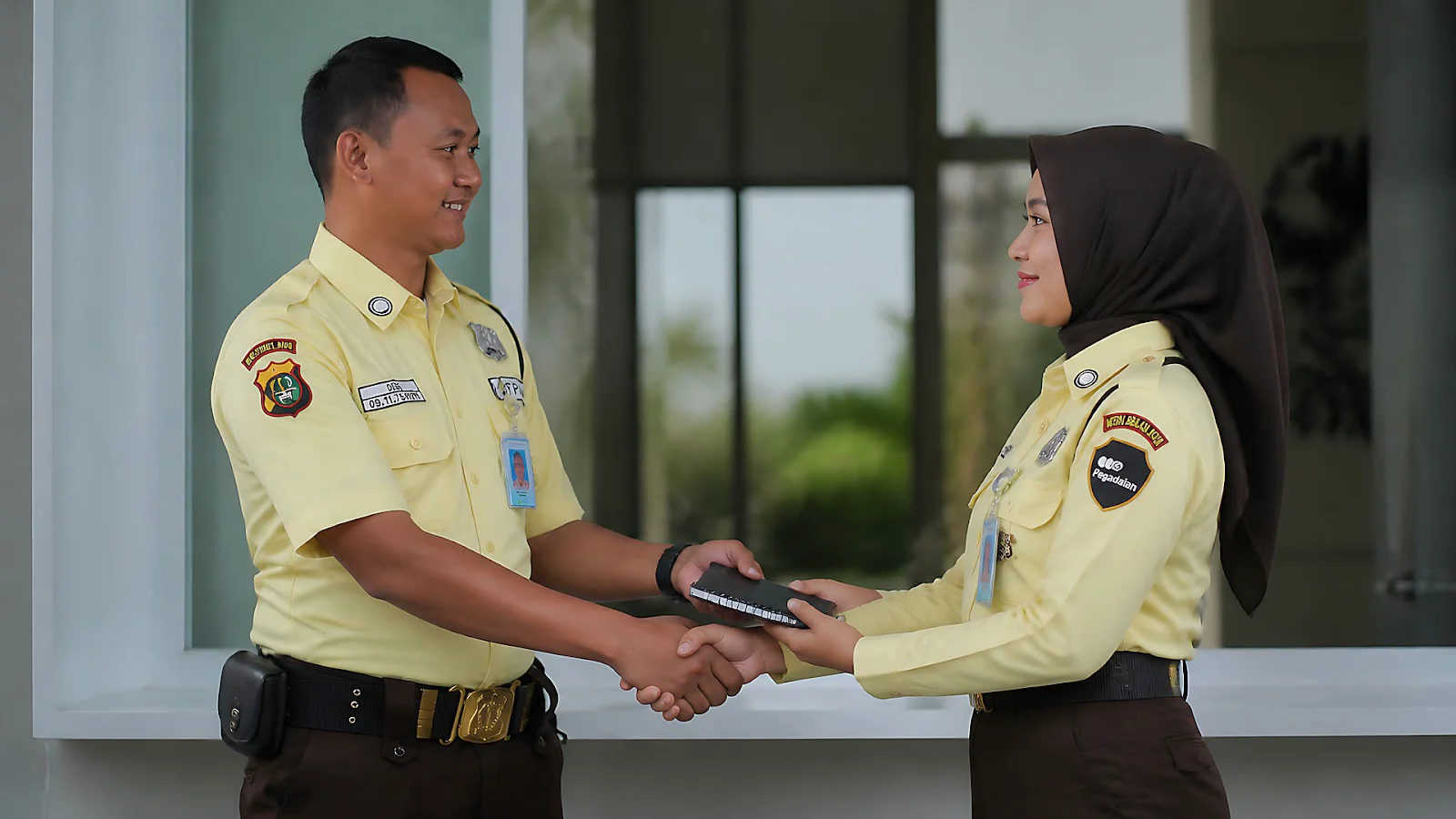
Company security needs consistent supervision throughout operating hours. Changing guards is a key moment because each officer must understand site conditions, ongoing activity and risks needing attention. Without orderly handover, the next shift may lose important information, such as guests still in work areas, vehicles that have not left, damaged security devices or incidents needing follow-up. Companies should therefore apply handover procedures systematically, which helps professional security guards keep supervision continuous, improve coordination and reduce mistakes.
Handover is more than a change of personnel; it makes sure every officer shares the same understanding of the security situation and their duties.
The departing officer may have found suspicious activity, received employee reports or handled a rule violation. If this is not passed on, the next officer struggles to decide the next step. Companies should build a clear reporting habit: important incidents, time, location, actions taken and resolution status.
Uncoordinated shift changes can leave supervision gaps at entrance gates, parking, warehouses, lobbies and other points needing routine attention. Officers must make sure the replacement understands their duties before leaving the post, so supervision continues without disturbing operations.
Radios, surveillance cameras, inspection tools and access control devices support officers. If damage or disruption is not reported, response in an emergency can suffer. Equipment checks should be part of handover, with officers reporting device condition, problems and repair needs to the responsible person.
Companies can build handover through simple, clear and easy-to-apply work standards, adapted to site characteristics, number of officers and operational risk.
Before ending duty, officers summarize shift activity: environment conditions, visitor counts, vehicle movement, notable incidents and issues needing attention. Write concisely and factually, avoiding irrelevant details. For example, an officer may note that the back-door camera has had problems since a certain time, so the next officer can increase supervision there while waiting for the technician.
Written notes help documentation, but direct communication still matters. The outgoing officer explains priority incidents, changes in site conditions and unfinished work to the replacement, who can ask questions to confirm understanding and avoid misreading the report. With several posts, a coordinator makes sure each officer gets information relevant to their area.
The incoming officer checks the post, communication devices, logbook, keys, access cards and other equipment as needed, so any shortage is recognized before duty starts. Both officers confirm equipment matches the records, report differences to the coordinator, and follow a checklist so the same steps are taken at every shift change.
Not every security issue can be solved in one shift: an officer may be waiting for management confirmation, technician follow-up or visitor administration. The outgoing officer explains the last status of each issue, including actions taken, parties contacted and next steps, so the incoming officer can continue without restarting checks, saving time and keeping responses consistent.
After receiving the report, the replacement must understand supervision priorities, points needing special attention, schedules of important activity and communication lines with the company's responsible person. The coordinator can ask officers to repeat key information to make sure no detail is missed, which helps especially in changing situations or high-risk areas.
Companies should set a standard structure so every report is consistent:
• Site security conditions: general situation in work areas, including points needing extra supervision.
• Visitor and vehicle activity: important visits, vehicles still on site and activity that deviates from procedure.
• Special incidents: security disturbances, complaints, accidents or other conditions needing follow-up.
• Equipment condition: devices working normally, technical problems and repair needs.
• Follow-up work: unresolved issues, who has received the report and next actions.
• Officer names and handover time: helps trace responsibility and give records context.
Orderly documentation helps coordinators evaluate work quality and find patterns of problems, and companies can use reports to improve security procedures step by step.
The security coordinator makes sure all officers follow procedures consistently: checking report completeness, monitoring schedule compliance and confirming officers understand company instructions. The coordinator also follows up reports needing management decisions, such as device damage, access violations or equipment shortages. Regular evaluation helps spot recurring problems, so if officers keep missing certain information, the report format can be clarified or extra briefing given. Companies should assess performance with indicators such as report accuracy, documentation completeness, procedure compliance and quality of coordination between shifts.
Companies with busy operations need officers who keep discipline and run procedures consistently, including task division, briefing, supervision and reporting. Through security workforce outsourcing, companies work with a provider that meets personnel needs according to site characteristics, so management can focus on core business while staffing follows agreed standards. Before choosing a provider, check experience, personnel competence, supervision system and evaluation mechanism, and make sure the provider understands handover needs, including report formats, post division and incident procedures.
The right vendor knows that security quality does not depend only on headcount: coordination, discipline, communication skill and accuracy in recording incidents also decide effectiveness. Ask about personnel briefing, coordinator supervision and reporting mechanisms; this helps assess fit for offices, warehouses, factories and other sites. Set clear communication lines with the provider, so both sides can resolve operational issues in a more directed way.
Companies that want better security should work with a provider that understands operational needs: correct headcount, plus discipline, coordination and report quality. Optimajasa provides security services to support company protection and the work environment. Companies can discuss site characteristics, operational patterns, personnel needs and desired supervision standards. For more information about professional security guard services, visit the official Optimajasa Security page:
Gedung Pegadaian Kenari Lantai 4
Jl. Salemba Raya No.2, Kel. Kenari,
Kec. Senen, Kota Jakarta Pusat 10430
Deep cleaning protocol and cleaning shift management during the year-end holiday: critical building cleaning points and standby staff scheduling.
November 23, 2026