Company Profile
About UsCareers
Job OpeningsHead Office
Gedung Pegadaian Kenari Lantai 4
Jl. Salemba Raya No.2, Kel. Kenari,
Kec. Senen, Kota Jakarta Pusat 10430
Copyright © 2026 PT Pesonna Optima Jasa. All Rights Reserved.
Follow Us
Gedung Pegadaian Kenari Lantai 4
Jl. Salemba Raya No.2, Kel. Kenari,
Kec. Senen, Kota Jakarta Pusat 10430
 November 23, 2026
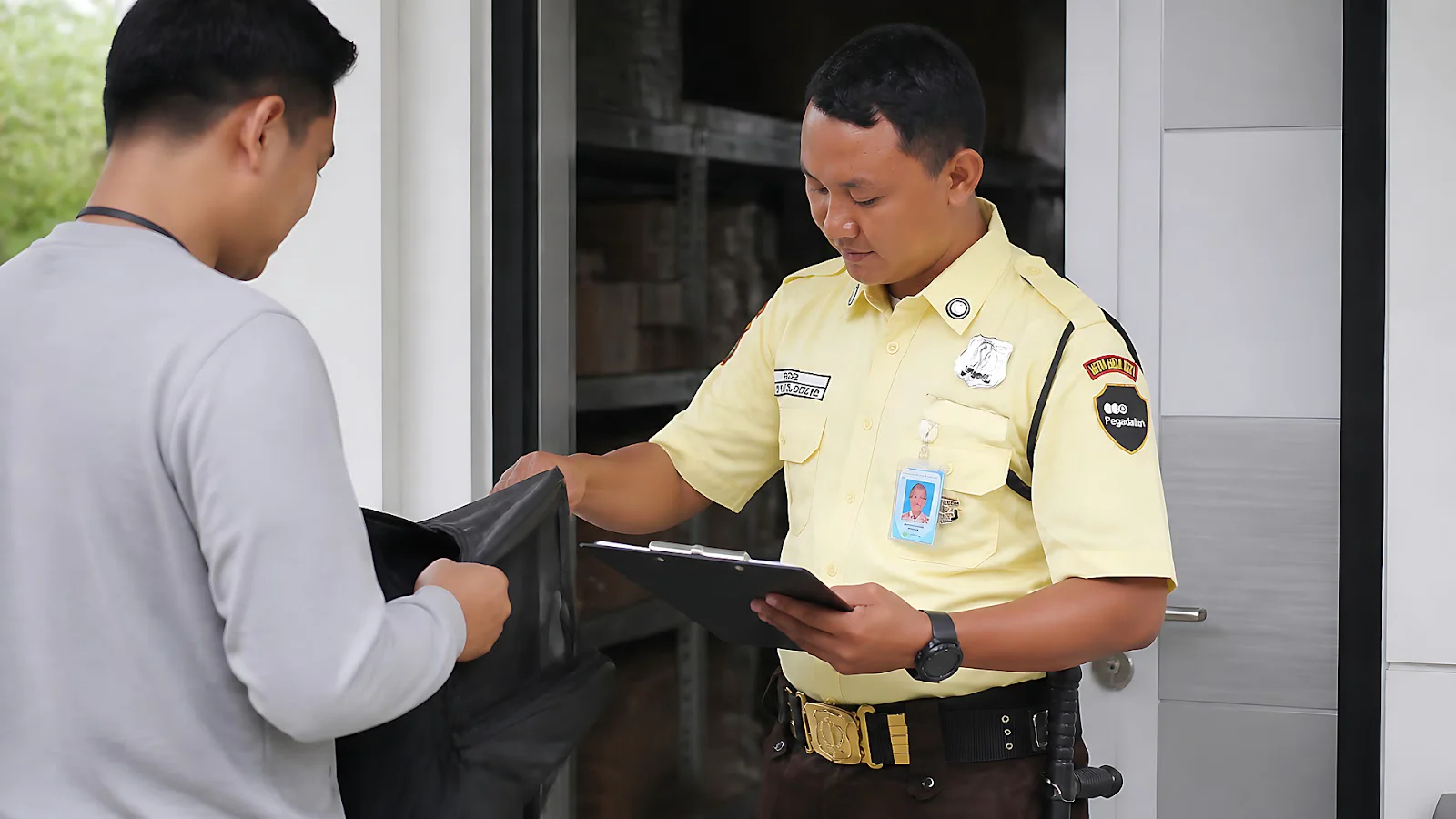
Company assets play a vital role in keeping operations smooth and supporting growth: work equipment, operational vehicles, inventory, important documents, technology devices and building facilities. Loss or damage raises operating costs, slows work and erodes customer trust. Companies therefore need an asset protection system that combines work procedures, environmental supervision, inventory records and security workforce management, which helps management spot problems early. Professional security guards support this through area supervision, access checks, monitoring suspicious activity and incident reporting, but operations, warehouse managers, HR and management must also understand their responsibilities.
Before choosing a prevention strategy, understand the factors that can trigger asset loss. Every site is different, so measures must fit real conditions.
Work areas with many entrances, open warehouses and loading activity need consistent supervision. If officers do not know the weak points, unauthorized people can enter certain areas unnoticed. Companies should map where high-value goods are stored, vehicle entry and exit routes and rarely supervised areas, which guides officer placement and device needs.
Recording errors make it hard to tell asset loss from administrative mistakes. A quantity difference in the warehouse requires checking receiving, issuing and movement records. Management should set clear inventory procedures and every asset movement needs a matching record so location and responsible party can be traced.
Shipping and receiving involve employees, suppliers, drivers and outside parties. Without document checks and good coordination, companies can see quantity discrepancies or lose track of a shipment's origin. Officers must know which documents to check within their authority and coordinate with warehouse staff so vehicles and goods follow company procedure.
Not all risk comes from outsiders: unauthorized access, lending ID cards or moving goods without approval can also cause loss. Companies should set access rules by employee responsibility and explain procedures for borrowing equipment, issuing goods and using facilities so everyone knows their authority limits.
Prevention needs a system that is easy to understand and consistently applied. Companies can start by improving basic procedures before adding technology or personnel.
Identify important assets and locations needing special supervision, grouping assets by value, function, mobility and the impact of loss on operations. Operational vehicles, electronics, high-value raw materials and confidential documents may need different controls. Management should decide who is responsible for each asset group and how officers monitor movement, and high-risk areas may receive more intensive supervision than low-activity, limited-access locations.
Set procedures for vehicles carrying goods in or out: checking delivery notes, matching quantities, recording vehicle numbers and confirmation from the relevant department. Officers run checks per company policy without deciding beyond their authority; when documents differ or information is doubtful, they contact the responsible person before letting the vehicle continue. Coordination with logistics speeds checks and keeps records accurate.
Set clear rules for releasing goods, equipment and vehicles. Every release needs an accountable purpose and approval from an authorized party. Officers can check documents per procedure and record needed information, and for high-value assets companies can require extra approval or two-party checks. This keeps an administrative trail and eases tracing when inventory differences occur.
Decide supervision points by activity patterns and risk level: main gates, warehouses, parking, loading docks and access to storage rooms. Officers patrol per the company plan, watch the environment, make sure certain doors stay secure and report deviations from the norm. Surveillance cameras can support monitoring, with placement that considers security needs, privacy and applicable rules.
Security works better when employees help protect assets. Management should explain how to use equipment, report loss, secure documents and follow access procedures. Short briefings help employees recognize suspicious behavior, and a clear reporting channel lets them pass on information without confusion. A responsible work culture builds prevention from within rather than relying only on officers.
Guards supervise the work environment and help apply security procedures: controlling access, monitoring activity, patrolling and reporting events that may threaten assets. In warehouse operations, officers can check vehicles in and out and make sure drivers follow set routes. In offices, they can watch restricted areas and help secure shared facilities. Officers must also know how to handle suspicious situations without unnecessary conflict, using communication skill, accuracy, discipline and procedure knowledge. Companies should define authority limits clearly: when officers may act directly and when they must contact the coordinator or authorities.
Technology can strengthen supervision and improve record accuracy, but device choice should follow operational needs so investment brings real benefit.
• Surveillance cameras and access control: cameras help officers monitor strategic points and review events, while access control limits who enters rooms or areas. Make sure devices work, review footage per procedure and limit access to recordings to authorized parties.
• Digital inventory systems: record location, quantity, condition and movement of assets so management can compare administrative data with physical conditions. Barcodes or other identification technology speed checks, though employees must still follow recording procedures.
• Security report integration: combine officer reports with information from warehouse, logistics and facility managers, helping management find patterns such as repeated stock differences or disturbances at certain access points, and adjust patrol schedules or procedures.
Companies need a provider that understands operational needs and applies security standards consistently, so selection should go beyond headcount or price. Evaluate experience, officer competence, briefing process, supervision system and reporting mechanism, and make sure there is a clear coordination pattern when officers find disturbances. A suitable vendor helps arrange task division, patrols, access control and incident recording per the service agreement, but companies should still evaluate regularly so security quality matches business needs.
Officers must follow instructions, communicate well and record incidents accurately, and understand goods inspection procedures and coordination with other departments. Discuss competence needs from the start so the provider can adjust placement and briefing to site characteristics.
Service evaluation needs clear indicators: report accuracy, access procedure compliance, patrol consistency, incident response and administrative completeness. Evaluation is not only about finding shortcomings; results help company and provider agree on realistic improvements and better coordination.
Companies that want to protect assets consistently need to combine internal procedures with planned supervision. Professional security personnel can help run access checks, supervise activity and keep the work environment orderly. Optimajasa provides security services to support company and operational site needs, and companies can discuss site characteristics, activity patterns, personnel needs and supervision standards that fit their business risk. To learn more about professional security guard services, visit the official Optimajasa Security page:
Gedung Pegadaian Kenari Lantai 4
Jl. Salemba Raya No.2, Kel. Kenari,
Kec. Senen, Kota Jakarta Pusat 10430
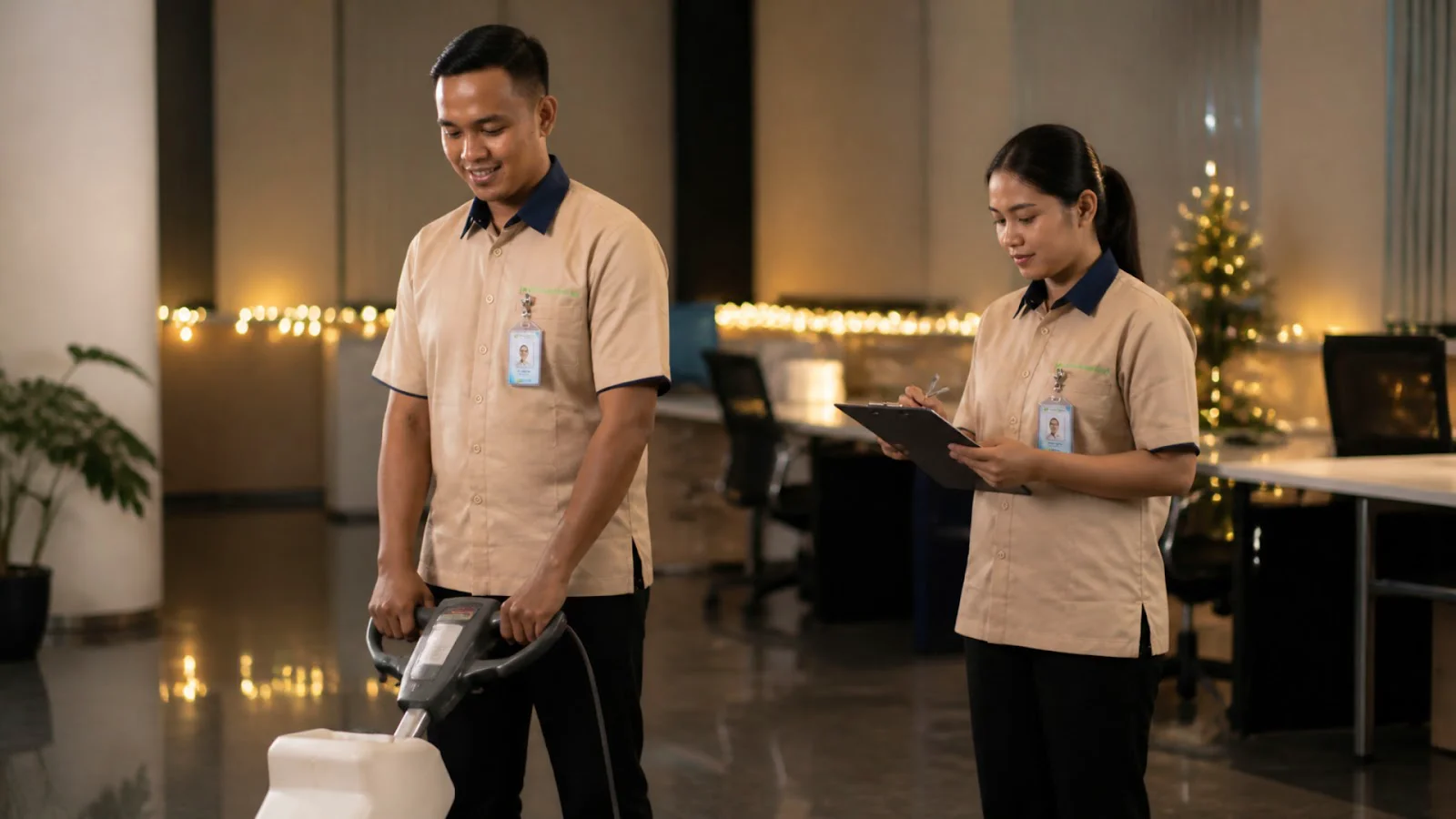
Deep cleaning protocol and cleaning shift management during the year-end holiday: critical building cleaning points and standby staff scheduling.
November 23, 2026