Company Profile
About UsCareers
Job OpeningsHead Office
Gedung Pegadaian Kenari Lantai 4
Jl. Salemba Raya No.2, Kel. Kenari,
Kec. Senen, Kota Jakarta Pusat 10430
Copyright © 2026 PT Pesonna Optima Jasa. All Rights Reserved.
Follow Us
Gedung Pegadaian Kenari Lantai 4
Jl. Salemba Raya No.2, Kel. Kenari,
Kec. Senen, Kota Jakarta Pusat 10430
 November 17, 2026
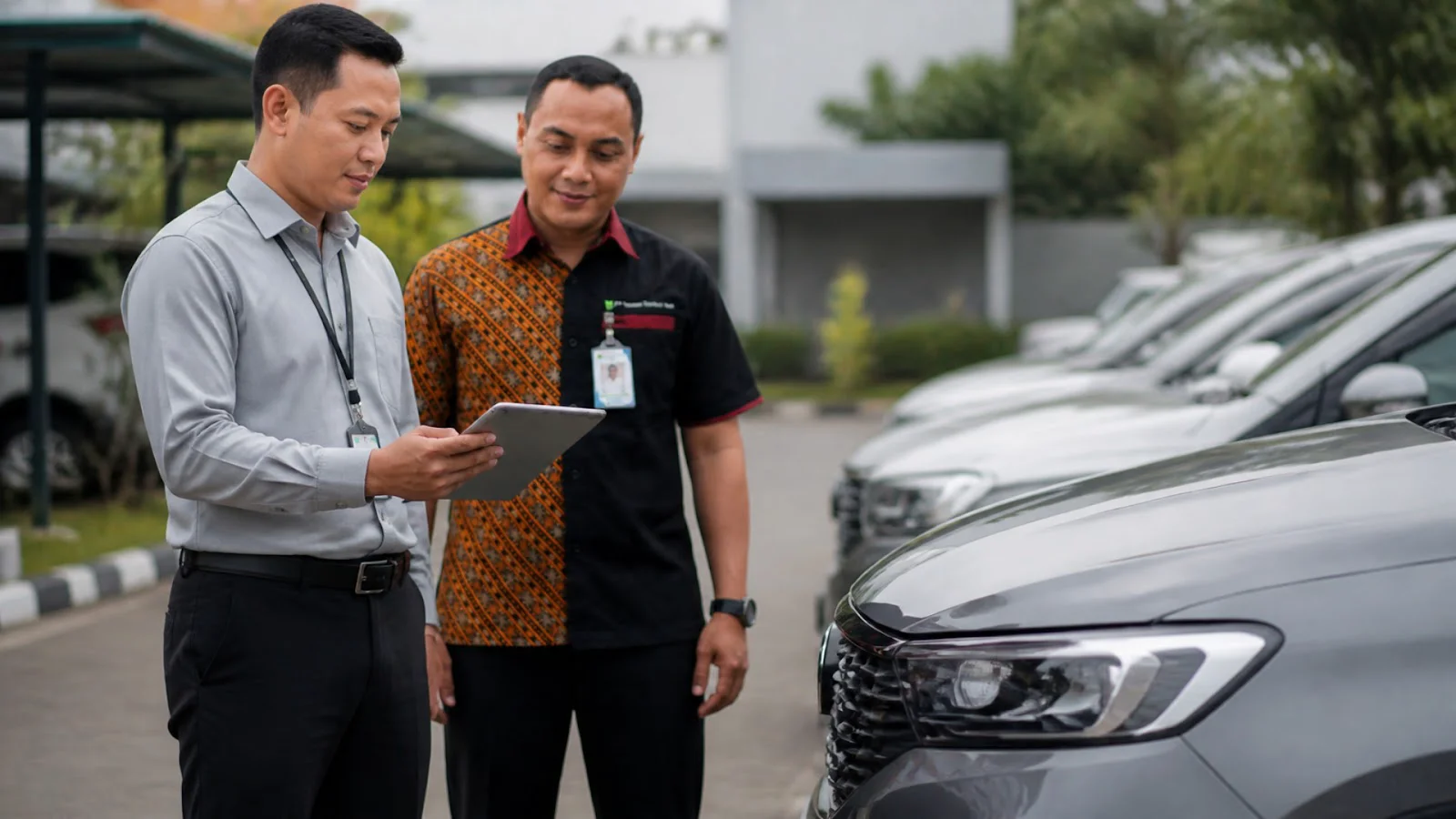
Vehicles play an important role in supporting business activity. Companies use vehicles for business trips, employee mobility, client visits, distribution, project activity, and operations in many locations. The wider a company's activity, the greater its need for an organized operational vehicle fleet.
Vehicle management needs systematic planning. Companies need to know the number of units, the function of each vehicle, users, usage level, vehicle condition, and maintenance needs. Good management helps companies keep mobility running smoothly while controlling operating costs.
Company fleet management also needs to follow business development. A company may see changes in headcount, new branches, more project activity, or an expanded work area. Each change can affect vehicle needs.
For this reason, companies need a fleet management strategy that can follow business dynamics. With the right approach, company operational vehicles give maximum benefit to business activity.
A vehicle fleet is part of a company's assets and operational support. When a company manages vehicles regularly, every unit can perform its function as needed.
On the other hand, unfocused management can cause problems. Companies may face suboptimal vehicle use, irregular maintenance schedules, rising operating costs, or a shortage of vehicles when mobility needs grow.
Company fleet management helps management understand vehicle condition and usage patterns. That information can become the basis for deciding maintenance, unit replacement, or fleet additions.
The first step in managing an operational fleet is defining the function of each unit. Companies need to know clearly what each vehicle is used for.
Some vehicles can serve director travel. Other units can support employee mobility, client visits, project activity, or field needs.
Dividing functions helps companies arrange vehicle use in a more focused way. Companies can also set usage priorities based on work needs.
When every unit has a clear function, it is easier for companies to evaluate vehicle utilization.
The number of vehicles needs to follow operational needs. Companies do not always need a large fleet. On the other hand, companies with high mobility may need more units.
Companies can analyze the number of trips, number of users, work locations, and frequency of vehicle use. This data helps companies decide the right fleet size.
If there are too few vehicles, employees may struggle to get one for work. If there are too many, the company bears higher operating costs.
The balance between needs and number of units is one key to company fleet management.
Maintenance is an important part of keeping company operational vehicles in good condition. Companies need to create inspection and maintenance schedules based on vehicle use.
Maintenance can include checking the engine, oil, brakes, tires, electrical system, and other components related to vehicle safety and comfort.
Companies need to record every maintenance activity. These records help companies know a vehicle's history and decide the next maintenance needs.
Routine maintenance also helps companies reduce the risk of vehicle trouble while employees carry out tasks.
Fuel is one cost component of vehicle operations. For this reason, companies need to monitor it regularly.
Companies can record each vehicle's fuel use and compare it with distance traveled. This data helps companies find inefficient usage patterns.
Monitoring also helps companies build operating budgets more accurately. Companies can know fuel needs based on vehicle activity.
With consistent recording, companies have better data for evaluation.
Data is an important part of vehicle management. Companies can collect information on vehicle use, distance, fuel costs, maintenance schedules, and frequency of use.
This data helps companies know which vehicles are used heavily and which are rarely used.
Companies can then adjust vehicle allocation based on evaluation results. Rarely used units can be moved to other needs, while heavily used units can get more attention for maintenance.
A data-based approach makes company fleet management more focused.
Companies need clear vehicle usage rules. These rules can cover who may use vehicles, the purpose of use, borrowing procedures, user responsibility, and return procedures.
A clear policy helps companies keep vehicle use orderly.
Companies can also set trip recording procedures. Users can record the trip purpose, distance, time of use, and other information the company needs.
This recording helps companies monitor each vehicle's activity.
Fleet efficiency also depends on vehicle choice. Companies need to choose vehicles based on work needs, not only price or appearance.
Vehicles for travel within the city have different needs from vehicles for intercity travel or field activity.
Companies also need to consider passenger capacity, cargo needs, road conditions, frequency of use, and travel distance.
The right vehicle choice helps companies get maximum benefit from every unit.
When companies need additional vehicles, they can consider working with a corporate car fleet procurement vendor.
A vendor can help companies find solutions based on number of units, vehicle type, and function of use. This approach can help companies save time in meeting vehicle needs.
Companies can share fleet needs with a vendor and then discuss options that fit business activity.
This strategy is very relevant for companies that need several vehicles at once or have fleet needs in many locations.
Companies need to evaluate vehicles that are old or have high operating costs.
If maintenance costs keep rising and vehicles often have trouble, companies need to recalculate the efficiency of using them.
Companies can compare the cost of keeping a vehicle with the cost of getting a replacement unit. This analysis helps companies decide based on actual conditions.
Regular evaluation keeps the operational fleet relevant to business needs.
Companies with several offices or branches need a location-based management strategy. Each region can have different vehicle needs.
The head office may need vehicles for business trips and management mobility. Other branches may need vehicles for field activity or customer visits.
Companies can map needs by region to decide vehicle allocation.
This strategy helps companies avoid vehicles piling up in one location while another lacks fleet.
Trip planning can help companies reduce unnecessary vehicle use. Employees can combine several agendas in one trip when locations and times allow.
This strategy helps optimize vehicle use and reduces fuel consumption.
Companies can also schedule trips by work priority. This way, vehicles can be used more effectively.
Companies do not always have to manage all vehicle needs on their own. Working with a vendor can help companies meet fleet needs when internal vehicles are not enough.
A vendor that understands corporate needs can help companies choose vehicle solutions based on function and business activity.
Company operational vehicles can be obtained through schemes that fit business needs. Companies can discuss the number of vehicles, fleet type, and usage needs with a vendor.
This approach gives companies flexibility in managing mobility without making hasty decisions.
Optimajasa provides solutions for company vehicle needs. We help companies meet operational fleet needs based on function and business activity.
We understand that companies need vehicles that can support the mobility of directors, employees, and operational teams. For this reason, we help companies direct fleet needs according to the character of their business activity.
Optimajasa services can support corporate car fleet procurement, operational vehicles, official cars, and corporate vehicle needs.
Companies can consult on fleet needs through the Optimajasa vehicle service:
Gedung Pegadaian Kenari Lantai 4
Jl. Salemba Raya No.2, Kel. Kenari,
Kec. Senen, Kota Jakarta Pusat 10430