Company Profile
About UsCareers
Job OpeningsHead Office
Gedung Pegadaian Kenari Lantai 4
Jl. Salemba Raya No.2, Kel. Kenari,
Kec. Senen, Kota Jakarta Pusat 10430
Copyright © 2026 PT Pesonna Optima Jasa. All Rights Reserved.
Follow Us
Gedung Pegadaian Kenari Lantai 4
Jl. Salemba Raya No.2, Kel. Kenari,
Kec. Senen, Kota Jakarta Pusat 10430
 November 20, 2026
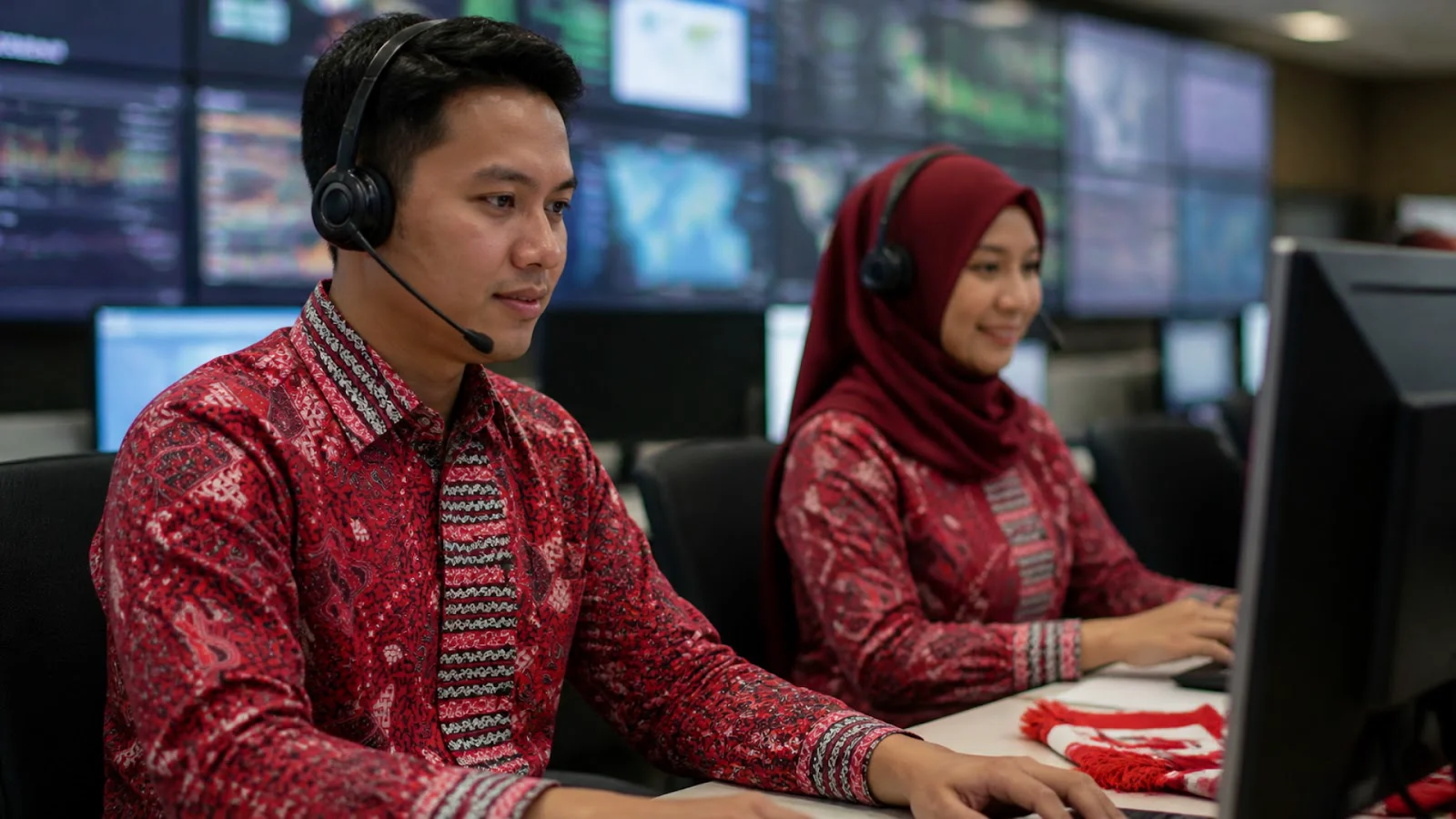
Football fever is sweeping Indonesia again as the national team heads into the 2027 AFC Asian Cup. For businesses, every Garuda match is more than a sporting event: it is a surge in customer interactions across banking, e-commerce, telecom, transport and hospitality. A data-driven call center strategy keeps service quality stable when traffic spikes.
Traffic does not rise evenly on match day. It builds in three phases: a pre-match wave of ticket, travel and promo questions; a near-silent window during the game itself followed by a sharp burst at the final whistle; and a post-match wave of complaints, refunds and follow-ups. Planning staffing for each phase, rather than for the daily average, is what prevents long queues.
Indonesia's group-stage fixtures: Japan vs Indonesia on 11 January 2027 at 17:30 WIB in Jeddah; Indonesia vs Qatar on 16 January 2027 at 20:30 WIB in Al-Khobar; and Thailand vs Indonesia on 20 January 2027 at 17:30 WIB in Jeddah.
Hotel and transport occupancy around travel and viewing events can rise by roughly 25% to 40%, which pushes inquiry volume up in the same proportion for travel, accommodation and payment services.
• Service level of 80/20: 80% of calls answered within 20 seconds.
• Abandonment rate below 5%.
• Average speed of answer under 25 to 30 seconds.
• First contact resolution of 70% to 75%.
• Customer satisfaction (CSAT) above 85%.
• Banking and fintech: payment, top-up and transaction issues spike around ticket sales and viewing parties.
• E-commerce and retail: jersey, merchandise and promo campaigns drive order and delivery questions.
• Telecommunications and streaming: connectivity and subscription issues peak during live broadcasts.
• Transport and travel: booking, rescheduling and refund requests rise before and after matches.
• Hospitality and food and beverage: reservation and delivery demand grows for viewing events.
An in-house team gives you full control and deep product knowledge, but scaling it for short, unpredictable spikes means hiring, training and idle cost once the tournament ends. Outsourcing offers elastic capacity, ready infrastructure and trained agents that can be activated quickly, and you pay only for the capacity you use. For event-driven surges, a hybrid model, with an in-house core team and an outsourced overflow partner, is often the most efficient.
• Scalable agent capacity that can be activated for peak periods.
• Data-driven forecasting and real-time monitoring of traffic and KPIs.
• Trained, multi-channel agents covering voice, chat and email.
• Transparent SLA reporting so you stay in control of service quality.
How early should we prepare for a match-day surge? Start at least 2 to 4 weeks ahead: forecast volume from past events, confirm staffing and run scripts and system tests.
Can an outsourced call center be activated quickly? Yes. A provider with ready infrastructure and trained agents can scale up within days instead of the weeks needed for in-house hiring.
Which KPI matters most during a surge? Service level and abandonment rate are the first to reflect queue pressure, followed by first contact resolution and CSAT.
Gedung Pegadaian Kenari Lantai 4
Jl. Salemba Raya No.2, Kel. Kenari,
Kec. Senen, Kota Jakarta Pusat 10430
 Business Insights
Business transportation solutions: corporate official car procurement and rental with Optimajasa, covering fleet plans, car types, drivers, and security.
November 17, 2026