Company Profile
About UsCareers
Job OpeningsHead Office
Gedung Pegadaian Kenari Lantai 4
Jl. Salemba Raya No.2, Kel. Kenari,
Kec. Senen, Kota Jakarta Pusat 10430
Copyright © 2026 PT Pesonna Optima Jasa. All Rights Reserved.
Follow Us
Gedung Pegadaian Kenari Lantai 4
Jl. Salemba Raya No.2, Kel. Kenari,
Kec. Senen, Kota Jakarta Pusat 10430
 November 23, 2026
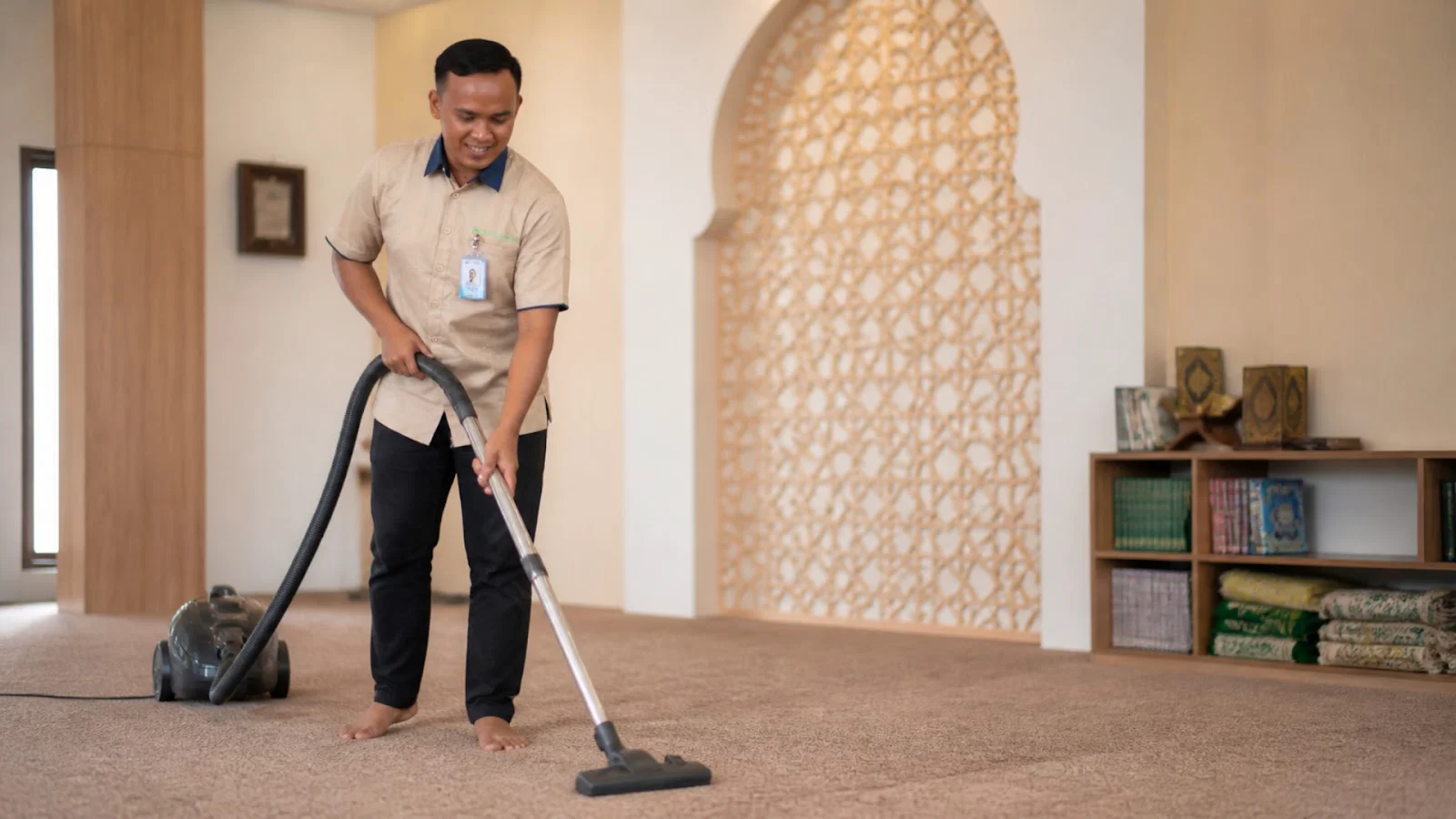
During the holy month of Ramadan, the rhythm of activity in offices, factories and public service areas shifts significantly. Normally peak density is in the canteen or pantry at lunch, but in Ramadan staff traffic centers on prayer areas (musholla) and ablution spaces, then shifts to dining or meeting rooms near iftar (breaking the fast) and suhoor for companies with shift systems.
This mobility change requires General Affairs (GA) and facility management teams to adjust building cleaning SOPs. Without proper schedule and sanitation adjustments, musholla areas risk becoming damp and musty, while leftover iftar food can attract pests in work areas.
Based on workplace health standards and operational observations of commercial buildings in Indonesia, these are the cleanliness dynamics to anticipate during Ramadan.
• Surge in musholla and ablution area density (200% to 300%): around Dhuhr (12.00 to 13.30) and Asr (15.00 to 16.00) prayers, use of prayer and ablution areas rises two to three times versus normal days. Frequent movement through wet areas raises slip hazard and moves moisture onto prayer carpets.
• Safe indoor humidity range (40% to 60% RH): per Minister of Health Regulation No. 70 of 2016 and ASHRAE standards, ideal relative humidity is 40% to 60%. Above 65% in closed musholla areas speeds growth of mold spores and odor-causing bacteria on carpets and prayer equipment.
• Organic waste increase toward evening (30% to 40%): office iftar gatherings and takjil consumption raise organic and food packaging waste by 30% to 40% between 17.30 and 19.30. Food and sugary drinks left overnight are the main trigger for vectors such as cockroaches, flies and rats.
• Public facility sanitation duty: under Minister of Manpower Regulation No. 5 of 2018 on workplace K3, companies must keep sanitation facilities, rest rooms and prayer areas clean, odor-free, well ventilated and free of accident hazards.
Key to operational efficiency: keeping a building clean during Ramadan does not always mean adding many staff; it needs dynamic scheduling and more frequent cleaning at critical points.
To keep worship comfortable and occupants healthy, the cleaning team should apply these protocols.
• Repeated dry mopping: damp or dry mop every 15 to 30 minutes at peak times (Dhuhr, Asr and Maghrib) in the transition between ablution and musholla entrance so splashes do not reach carpets and no one slips.
• Daily carpet vacuum and disinfection: vacuum with HEPA-filter cleaners every afternoon after Asr, then spray textile-safe fabric sanitizer that is skin-safe and free of respiratory irritation to neutralize bacteria and keep the room fresh.
• Prayer garment hygiene: office inventory prayer garments and sarongs should be washed at least twice a week and stored on open-air hanging racks, not stacked in damp closed cabinets.
• Air circulation: switch on exhaust fans in the ablution area and the musholla AC before Dhuhr so air stays cool and humidity controlled.
• Iftar rapid cleaning: for offices with iftar gatherings or night operations, cleaners sweep meeting rooms, pantries and desks within 30 minutes after iftar to collect leftovers and empty organic bins to the temporary storage (TPS).
• Daily fridge and microwave inspection: staff check daily to clean spills and make sure no expired food causes odor contamination.
• Dishwashing area and dispenser sanitation: clear kitchen sink drains of rice or grease every afternoon so pipes do not clog and smell in the morning.
• Adjusted toilet inspection times: increase checks of floors, hand soap and tissue refills at 11.30 (before Dhuhr) and 17.00 (before iftar).
• Main contact point disinfection: scheduled spraying and wiping of musholla door handles, ablution taps, lift buttons, stair handrails and shared dining tables.
So all protocols run smoothly without disturbing staff who are also fasting, GA teams and the cleaning vendor should align the schedule.
• Early shift alignment: following Ramadan work hours that usually start 30 to 60 minutes earlier, move the morning cleaning shift earlier so all work areas are sterile before employees arrive.
• Late standby for iftar and suhoor: for facilities operating late or 24 hours (three-shift factories, banks, customer service, hospitals), arrange standby staff at 17.30 to 20.00 (iftar) and 03.00 to 05.00 (suhoor).
• Staggered breaks: schedule iftar and Maghrib prayer breaks in turns so musholla and pantry stay monitored at iftar time.
Managing cleaning schedule dynamics and high hygiene standards during Ramadan needs flexible workforce planning and consistent field supervision. PT Pesonna Optima Jasa manages more than 1,400 trained cleaning staff across Indonesia under Quality, Occupational Health and Safety, Environment and Anti-Bribery (MK3L-AP) governance. Its operations team helps companies adjust Ramadan shift schedules, apply sanitation protocols for prayer areas and pantries with safe eco-friendly chemicals and keep building cleanliness at its best throughout the holy month. To learn more, visit the official Optimajasa Cleaning Service page:
• How do we deal with musty musholla carpets during Ramadan? Prevent ablution water from reaching the carpet with high-absorbency mats and regular dry mopping. Also vacuum daily with a HEPA vacuum, spray fabric sanitizer after Asr and make sure AC or exhaust fans run well.
• Can outsourced cleaning schedules be adjusted to Ramadan office hours? Yes, professional outsourcing providers are flexible in shift adjustments to follow the client's operating policy during Ramadan without reducing the total service hours agreed in the contract.
• How should iftar food waste be handled in offices without night shifts? For regular-hours offices holding iftar gatherings, the GA team can coordinate with the vendor's field coordinator to arrange planned overtime or a split shift for one or two staff so organic waste is cleared to the TPS that same night.
A facility cleaning guide for General Affairs and Facility Management teams, covering three areas.
• Musholla and ablution area: before Dhuhr (11.00 to 11.30) switch on exhaust fans and AC, check the water-absorbent mat is dry and check ablution drains for puddles or moss. At peak hours (12.00 to 13.30 and 15.00 to 16.00) dry mop every 30 minutes, keep corridors free of puddles and tidy prayer mats and footwear. After Asr (16.00 to 16.30) vacuum carpets, spray skin-safe fabric sanitizer and hang prayer garments on open racks, washing them twice a week.
• Pantry and iftar room: before iftar (16.30 to 17.00) empty all bins and stock dish soap, clean sponges and kitchen tissue. After iftar (18.30 to 19.30) wipe tables with food-grade disinfectant, clear food and grease from the sink and, critically, tie and dispose of all organic waste to the TPS that same night so no wet waste stays in the building.
• Toilets and high-touch surfaces: inspect at 11.30 and 16.30, refill tissue and hand soap, keep floors dry and use air freshener against ammonia odor. Disinfect at least twice daily: lift buttons, access panels, door handles (musholla, toilets, main door), handrails and attendance or coffee machines.
Ramadan changes building activity patterns drastically. Dynamic scheduling and more frequent cleaning at critical times (Dhuhr, Asr and Maghrib) are the key to preventing Sick Building Syndrome and keeping employee productivity high while fasting.
• Minister of Health Regulation No. 70 of 2016 on Health Standards and Requirements for Industrial and Office Work Environments.
• Minister of Manpower Regulation No. 5 of 2018 on Occupational Safety and Health in the Work Environment.
• KLHK: SIPSN on organic waste dynamics during Ramadan.
• ASHRAE Standard 62.1: Ventilation and Acceptable Indoor Air Quality.
• ISSA: Facility Cleaning and Disinfection Frequency Guidelines.
Gedung Pegadaian Kenari Lantai 4
Jl. Salemba Raya No.2, Kel. Kenari,
Kec. Senen, Kota Jakarta Pusat 10430
Deep cleaning protocol and cleaning shift management during the year-end holiday: critical building cleaning points and standby staff scheduling.
November 23, 2026