Company Profile
About UsCareers
Job OpeningsHead Office
Gedung Pegadaian Kenari Lantai 4
Jl. Salemba Raya No.2, Kel. Kenari,
Kec. Senen, Kota Jakarta Pusat 10430
Copyright © 2026 PT Pesonna Optima Jasa. All Rights Reserved.
Follow Us
Gedung Pegadaian Kenari Lantai 4
Jl. Salemba Raya No.2, Kel. Kenari,
Kec. Senen, Kota Jakarta Pusat 10430
 November 23, 2026
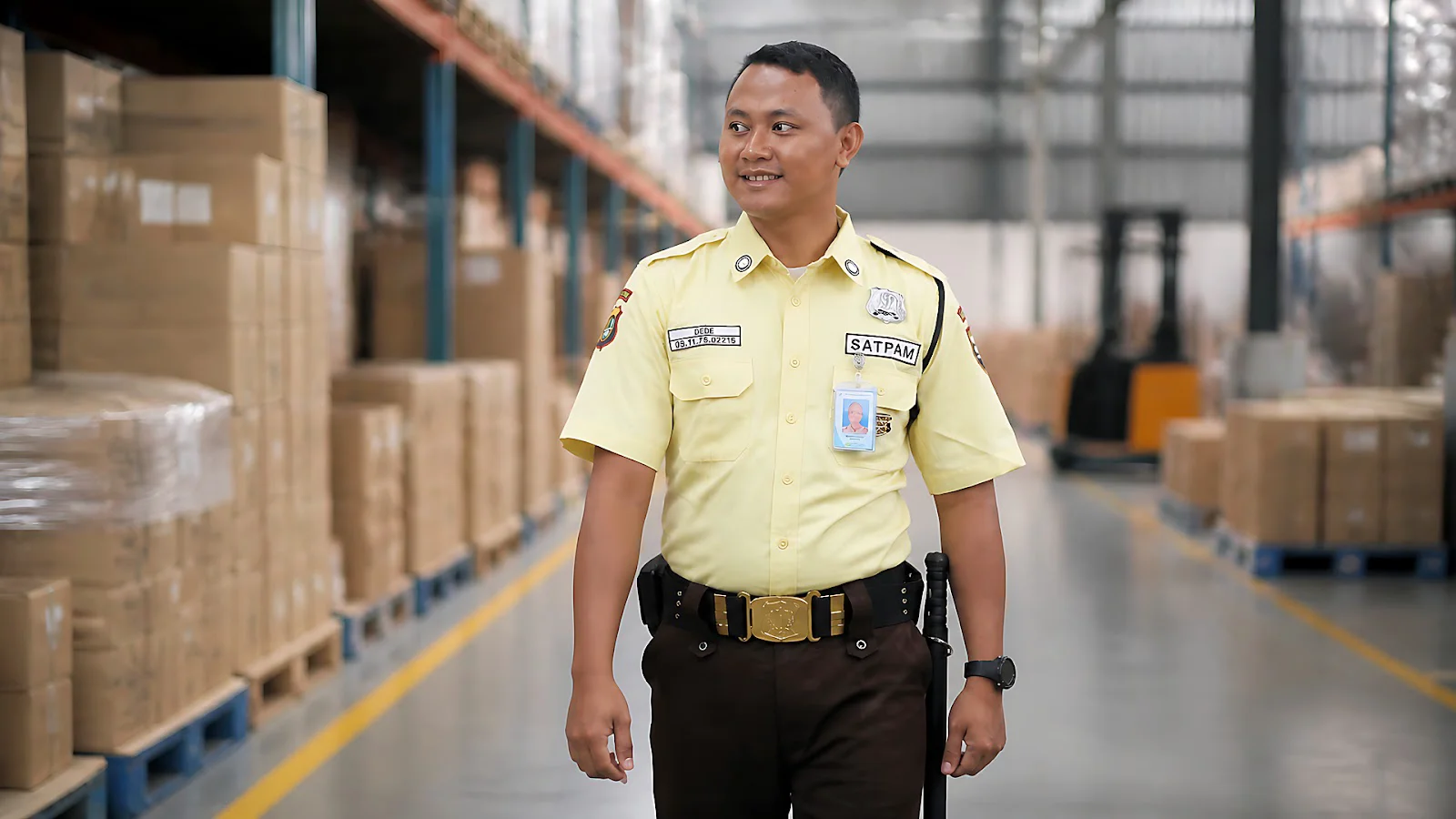
Warehouses play a key role in the operational chain, storing raw materials, finished goods, equipment and supplies for production and distribution. Security incidents can cause financial loss, delay shipments and strain customer relationships.
Warehouse activity involves employees, drivers, suppliers and logistics partners. This high mobility means companies must control access, supervise goods movement and make sure every activity follows clear procedures. Good warehouse security needs cooperation between management, logistics, inventory staff and security personnel. With professional security guard support, companies can strengthen area supervision, manage vehicle entry and exit and respond to suspicious activity in an organized way.
Each warehouse differs by type of goods, building size, shipment volume and workforce, so companies should identify main risks to set security priorities.
Differences between inventory records and physical stock can signal administrative problems or potential loss. Companies should trace every movement to find the cause accurately. Warehouse teams must record receiving, storage, transfer and release per procedure, and security officers can support this by checking in and out documents within their authority and company policy.
Warehouses often receive suppliers, drivers, technicians and other outsiders. Without adequate checks, people with no business can enter storage areas and disrupt operations. Companies should set access limits for each visitor category, and officers should check identity, confirm the purpose of the visit and contact the responsible person before granting access to restricted areas.
Loading and unloading move large quantities of goods in a short time, requiring coordination between warehouse staff, drivers, administration and security. Wrong vehicle numbers, mismatched delivery notes or changed destinations can cause problems, so companies should set checking procedures that let each party match information before a vehicle leaves.
Warehouse security is not only about theft. Blocked emergency doors, poor lighting, damaged access and disorganized goods placement also create risk. Officers should watch environmental conditions on patrol and report problems to the responsible person quickly so the company can act.
Companies should build procedures that fit warehouse characteristics and distribution flow. A good system helps work run smoothly without unnecessary administrative obstacles.
Divide the warehouse into areas by function and risk level. Receiving, inventory storage, administration and high-value storage may need different access rules. Companies must explain who may enter each area, and officers run checks against the authority list and direct visitors to the right place. Access limits reduce movement of unauthorized people and make tracing easier when management must review an incident.
Every vehicle bringing goods in or out should follow a checking procedure. Officers can match vehicle numbers, driver identity, shipping purpose and relevant documents per company rules. For high-value shipments, companies can apply extra checks by risk level, and officers coordinate with the warehouse team when information differs or documents are doubtful. This keeps distribution orderly, improves record accuracy and lets management trace vehicle activity when needed.
Patrols help officers notice changes in warehouse conditions and find potential disturbances early. Set routes by building layout, storage locations, access doors and loading areas. Officers check doors, fences, lighting and activity around storage, and notice goods in the wrong place or activity that deviates from procedure. The security coordinator can evaluate patrol results through routine reports, and if problems keep appearing at one location, management can increase supervision or improve the layout.
Set clear requirements before goods leave the warehouse: release documents, approval from the responsible person, quantity matching and vehicle recording. Officers must understand which checks are their responsibility, contact relevant staff when they find discrepancies and wait for instructions per company procedure. This prevents unapproved releases and reduces administrative errors, and release records can be compared with inventory data.
Regularly check fences, locks, surveillance cameras, lights, communication devices and access equipment. Good facilities let officers supervise without unnecessary technical problems. Officers can include facility conditions in patrol reports, describing location, type of problem and impact on security, so management can prioritize repairs by risk level and avoid delays on issues that could disrupt warehouse security.
Security officers help supervise the warehouse environment and ensure procedures are followed. Duties can include access checks, vehicle arrangement, patrols, incident recording and coordination with operations. During loading and unloading, officers make sure vehicles follow set routes and do not block important access, guide drivers and keep order around work areas. They must understand their authority limits when checking documents or facing suspected violations: they need not decide beyond their responsibility but must pass findings to the right party. Companies should also brief them on goods types, warehouse layout, emergency procedures and reporting lines.
Warehouse security is more effective when security and logistics share the same understanding of receiving, release, transfer and discrepancy handling procedures. Companies can set clear communication lines so officers immediately contact the responsible person, for example the warehouse supervisor when document quantities differ from field conditions. Coordination should also cover changes in delivery schedules, supplier arrivals and inventory activity, so officers can adjust supervision without slowing operations. Management should also review reports from both sides regularly, since comparing data helps find problem patterns and design more accurate prevention steps.
Technology supports physical supervision and speeds up recording. Choose devices by operational needs, risk level and maintenance capability.
• Surveillance cameras and access control: cameras help monitor gates, loading areas and certain storage points and let management review events during loss or disputes, while access control limits who enters certain areas. Set access rights properly and check devices so the system keeps supporting security needs.
• Digital inventory systems: record goods movement and update stock information, and consistent data helps warehouse teams compare physical counts with administrative records. Companies can integrate inventory with shipping check procedures, but officers must still follow recording rules and report differences they find.
• Incident reporting systems: digital reports store patrol information, facility problems, vehicle activity and security events in a uniform format so management can find risk patterns. Define who may access reports and make sure officers know how to fill in data, so documentation stays consistent across shifts.
Companies needing consistent warehouse supervision can consider working with a professional security provider, but selection should consider personnel competence and understanding of warehouse workflow. Evaluate provider experience, briefing mechanism, coordinator supervision system and reporting procedure. The provider should also explain how it sets personnel needs based on area size, number of access doors and vehicle volume.
Warehouse security officers need accuracy, discipline, communication skill and understanding of inspection procedures. They should also know how to pass findings to supervisors without disturbing operations. Discuss these needs when defining the scope of cooperation so the provider can adjust placement and briefing to warehouse conditions.
Management should define indicators to evaluate service quality: report accuracy, compliance with access procedures, patrol consistency and speed of information when officers find disturbances. Periodic evaluation helps identify shortcomings and corrective actions, and companies can use results to realign security procedures with operational needs.
Warehouses need consistent supervision so companies can protect inventory, facilities and smooth distribution. Companies should make sure officers understand procedures, know their responsibilities and coordinate well with operations. Optimajasa provides security services to support company and workplace security needs, and companies can discuss warehouse characteristics, logistics activity patterns, personnel needs and supervision standards suited to their operations. To learn more about professional security guard services, visit the official Optimajasa Security page:

Gedung Pegadaian Kenari Lantai 4
Jl. Salemba Raya No.2, Kel. Kenari,
Kec. Senen, Kota Jakarta Pusat 10430
Deep cleaning protocol and cleaning shift management during the year-end holiday: critical building cleaning points and standby staff scheduling.
November 23, 2026