Company Profile
About UsCareers
Job OpeningsHead Office
Gedung Pegadaian Kenari Lantai 4
Jl. Salemba Raya No.2, Kel. Kenari,
Kec. Senen, Kota Jakarta Pusat 10430
Copyright © 2026 PT Pesonna Optima Jasa. All Rights Reserved.
Follow Us
Gedung Pegadaian Kenari Lantai 4
Jl. Salemba Raya No.2, Kel. Kenari,
Kec. Senen, Kota Jakarta Pusat 10430
 November 23, 2026
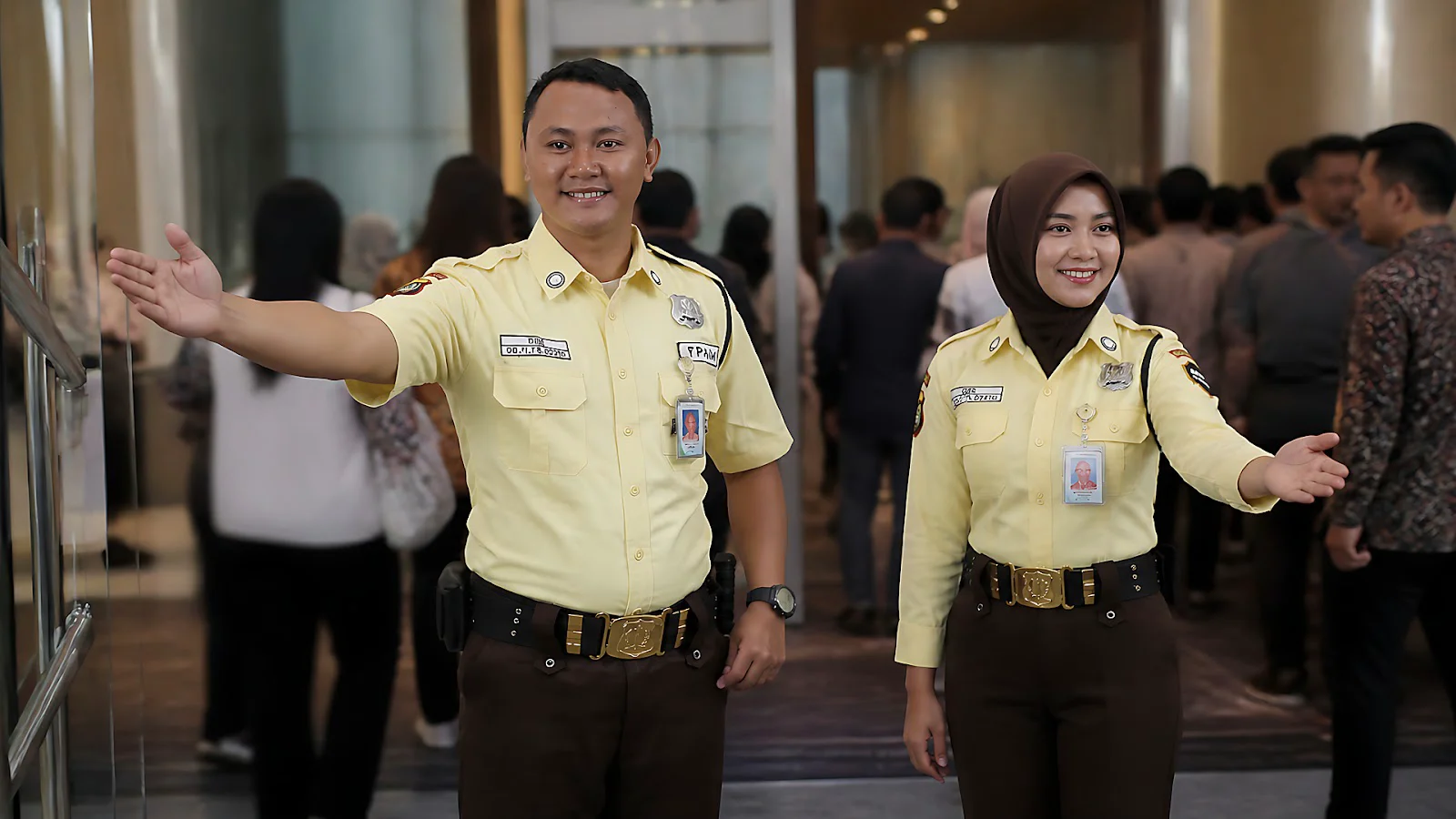
Companies often hold seminars, conferences, product launches, exhibitions, business meetings and internal events with many participants. Each event has different security needs depending on visitor numbers, venue, program and guest characteristics.
Organizers must consider entry access, participant flow, vehicle arrangement, equipment protection and emergency readiness. Without solid planning, crowds can block exits, queues cause discomfort and small disturbances grow into bigger problems. Companies should therefore prepare a security plan before the event. Professional security guard support helps organizers manage access, keep order, supervise event areas and coordinate when quick handling is needed.
Organizers should anticipate each risk from the planning stage, which helps determine personnel needs and security procedures.
Popular events can draw many participants in a short time. If queues and entrances are not organized, crowding can block registration and disrupt movement. Organizers should estimate participant numbers, provide adequate queue lanes and position officers at arrival points, who guide visitors to follow the entry flow without pushing.
Corporate events may involve invited guests, speakers, vendors, media and support staff, each with different access. Organizers should set invitation verification and registration procedures. Security officers can check identity per policy, direct participants to the right area and contact the committee when they find discrepancies.
Business events use presentation devices, cameras, computers, exhibition gear and visitors' personal items, and busy activity raises loss risk if storage and supervision are not arranged. The committee should set equipment storage locations, limit access to preparation rooms and set goods in and out procedures, while officers supervise these areas and report activity needing attention.
Participants entering special areas without permission or individuals disturbing the event can hinder the agenda and need a calm, measured response. Organizers should define special areas for speakers, VIPs and committee, and officers must know communication lines and how to ask for help when a situation exceeds their authority.
Good planning uses personnel and facilities efficiently. Organizers should adapt procedures to event scale, venue characteristics and potential risks.
First, survey the venue and identify points needing supervision: entrances, exits, parking, main hall, preparation rooms and equipment storage. The committee should also consider participant numbers, arrival schedule, guest characteristics and possible agenda changes, which help determine officer needs and prepare precautions. For large events, prepare a security plan document describing personnel responsibilities, communication procedures and incident handling steps.
Separate registration, event hall, committee room, speaker area and equipment storage. This helps visitors understand access limits and makes movement easier to supervise. The committee can use signs, barriers or ID cards to clarify each area's function, and officers must know who may enter each location and how to handle extra access requests. Area planning should also consider accessibility for participants with special needs and routes that must stay open for emergencies.
Officer numbers and positions should follow event needs, not just venue size. Busy entrances, registration, routes to the stage, parking and exits may need different attention. Organizers should assign each officer's responsibility to avoid overlap, and the security coordinator makes sure everyone knows their post and how to communicate with other teams. For multi-room events, the committee can divide supervision by zone to ease coordination.
An orderly registration system lets organizers control visitor numbers and speed up entry. The committee can use participant lists, invitation codes, event ID cards or digital systems. Officers follow the agreed verification procedure and, if participant data does not match, ask the registration committee for help before granting access. Where the venue allows, prepare separate lanes for speakers, invited guests, general participants and vendors to reduce queues and keep the agenda smooth.
The plan should cover fire, health problems, overcrowding, bad weather or other situations threatening participant safety. Organizers need to know evacuation routes, assembly points and who is responsible for decisions. Officers should give clear instructions and guide visitors without causing panic, and the committee should coordinate with venue management and emergency services as needed. For large events, brief the whole team before the event so everyone understands communication lines and responsibilities.
Guards help organizers keep access controlled, manage participant movement, supervise facilities and respond to disturbances, and they act as a link between visitors and the committee when someone needs direction. At entrances officers manage queues and check access per procedure; in the main hall they watch crowd density, keep access to the stage clear and make sure exits stay open. In parking they direct vehicles and keep traffic smooth, while personnel in preparation rooms help protect equipment and limit access to special areas. Officers should communicate politely and act proportionally, and in disputes follow handling procedure and ask the coordinator for support when more authority is needed.
Event security needs clear cooperation: the committee knows the program, the venue manager knows facility conditions and security officers focus on supervision and access control. Before the event, the three parties should discuss the schedule, participant numbers, entry and exit routes, equipment locations and emergency procedures to reduce miscommunication. Organizers should also set one communication line for important reports so officers pass on changes without relying on unverified information. After the event, the committee should evaluate security execution; notes on queues, complaints, access disruptions and coordination problems become input for improving future events.
Technology helps organizers manage participants and monitor the situation, but each device must support clear procedures so its use brings real benefit.
• Digital registration systems: speed up participant checks and help the committee manage attendance lists, and organizers can monitor how many participants have registered. Prepare an alternative procedure if the network or devices fail, and make sure registration and security staff know it so entry stays orderly.
• Surveillance cameras: help the team monitor entrances, parking and other strategic points and support checking the chronology during incidents. Place cameras by venue needs, respect participant privacy and make sure officers know who may access footage and the reporting procedure.
• Communication radios: let personnel pass information quickly during the event, useful when officers find crowding, need help or must direct vehicles. The coordinator should set channels and reporting protocol; short, clear, accurate messages help the team respond without disturbing the program.
Companies that often hold business events can consider working with a professional security provider, choosing one able to manage crowds, with competent personnel and good coordination. Check the provider's experience with similar events, and discuss officer numbers, area division, reporting systems and supervision mechanisms during the event. A provider that understands event needs can help plan placement by risk points, but the committee should still explain the agenda, participant profile and venue rules in detail.
Companies can assess service quality through key aspects such as punctuality, procedure compliance, communication skill, accuracy in supervising access and response to disturbances. Management should also make sure the provider has a clear coordination line when schedules change or extra security is needed. Detailed agreements help both parties manage the event in a more directed way.
Running events needs disciplined personnel who communicate well and understand security procedures, and companies should match security personnel needs to event scale and venue characteristics. Optimajasa provides security services to support company and workplace needs, and companies can discuss personnel needs, supervision patterns and event characteristics to determine a suitable service. To learn more about professional security guard services, visit the official Optimajasa Security page:
Gedung Pegadaian Kenari Lantai 4
Jl. Salemba Raya No.2, Kel. Kenari,
Kec. Senen, Kota Jakarta Pusat 10430
Deep cleaning protocol and cleaning shift management during the year-end holiday: critical building cleaning points and standby staff scheduling.
November 23, 2026