Company Profile
About UsCareers
Job OpeningsHead Office
Gedung Pegadaian Kenari Lantai 4
Jl. Salemba Raya No.2, Kel. Kenari,
Kec. Senen, Kota Jakarta Pusat 10430
Copyright © 2026 PT Pesonna Optima Jasa. All Rights Reserved.
Follow Us
Gedung Pegadaian Kenari Lantai 4
Jl. Salemba Raya No.2, Kel. Kenari,
Kec. Senen, Kota Jakarta Pusat 10430
 November 23, 2026
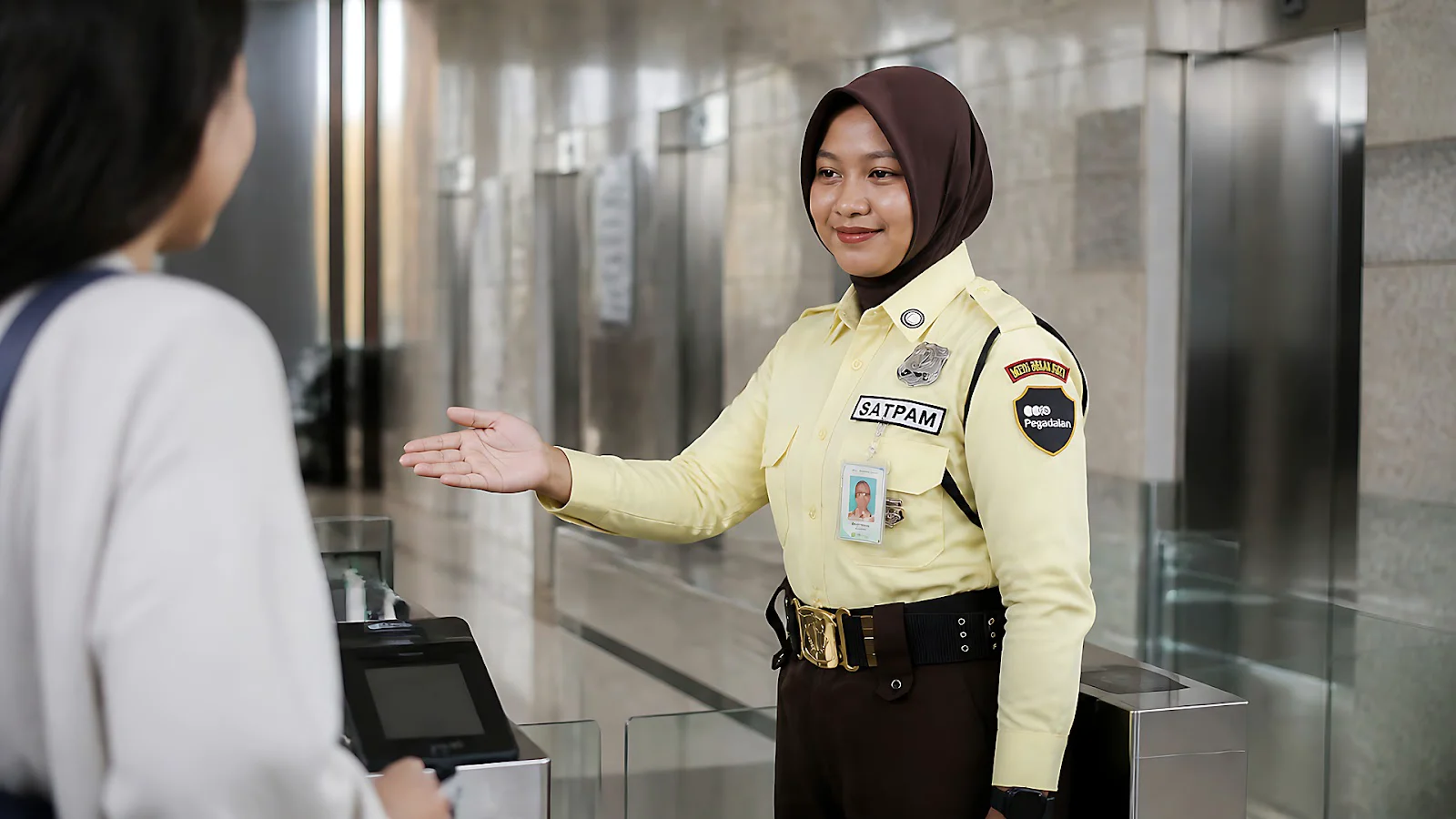
Multi-storey buildings host many companies, employees, visitors, service providers and operational facilities in one structure. Each floor can have a different function and risk level, so building managers need a system that controls access, maintains order and supports fast response in emergencies.
Security takes more than a guard in the lobby. Managers must consider lift access, emergency stairs, parking, utility rooms, delivery routes and shared facilities, each needing clear procedures so officers act consistently. With professional security guard support, companies and building managers can improve daily supervision, manage visitor movement and strengthen coordination when disturbances occur.
Before drafting procedures, managers should understand the building and its users, which helps set supervision priorities.
Office buildings receive guests, prospects, couriers, technicians and business partners daily. Without an orderly reception flow, officers struggle to confirm each visitor's purpose and direct them correctly. Managers should set registration procedures, confirmation with the host and access card rules, and lobby officers must know which areas visitors may enter and which need special permission.
Not all floors are equally sensitive. Some companies keep confidential documents, technology equipment or high-value assets in certain rooms, so managers should limit access by authority. Officers must understand area division and checking procedures and coordinate with building management when a visitor lacks permission for the stated purpose.
Lifts, emergency stairs and corridors are vital for movement. Misplaced items, crowding or facility problems can block movement. Managers must keep evacuation routes usable and free of storage, and officers should know emergency door locations, assembly points and communication procedures.
Building management involves security, technicians, cleaners, receptionists and facility management, each with different duties but needing mutually supporting procedures. Without clear coordination, information on damage, suspicious activity or schedule changes arrives late. Managers should set communication lines and responsibilities for each unit.
An effective system combines direct supervision, access control, emergency readiness and routine evaluation. Building managers can apply the following steps.
Set a reception flow from the moment visitors arrive in the lobby. Officers can check identity per policy, record the purpose, contact the host and give directions. In multi-tenant buildings, prepare a contact list of those responsible for each company so officers can confirm visits quickly. Visitor cards or digital registration help record activity and recognize visitors still inside.
Adjust lift access to building needs. With access cards, management can set rights by floor or area. Officers must know the procedure when someone loses a card or asks to go to a restricted floor and verify through authorized parties first. Managers should also supervise electrical panel rooms, server rooms, pump rooms and other technical facilities, since limiting access protects safety and infrastructure.
Patrols let officers see building conditions directly. Set routes by risk level, building size and occupant activity patterns. Officers check corridors, emergency doors, parking, lobbies and shared facilities per their responsibilities, and watch for suspicious items, damaged facilities or activity that breaks building rules. Important findings go in patrol reports so the coordinator can assess security and decide follow-up.
Keep access to emergency stairs and exit doors free of obstruction, and make sure exit signs, emergency lights and supporting facilities work. Officers should know emergency response procedures and whom to contact in a fire, earthquake or other disturbance, while managers align procedures with building safety systems and applicable rules. Regular evacuation drills help occupants know exits and assembly points, and officers can guide movement per the emergency coordinator's instructions.
Every incident needs clear documentation so management can assess causes and decide corrective action. Officers record time, location, chronology, parties involved and initial steps, covering access disruptions, facility damage, visitor disputes, accidents or risky findings. Urgent events go through set communication lines, and the security coordinator directs follow-up and makes sure relevant parties receive the information.
Guards interact directly with occupants, visitors and field activity. They help supervise access, keep order, patrol and report potential disturbances. In the lobby they give polite direction and ensure visitors follow registration; in parking they arrange vehicles and keep emergency routes clear; patrols on certain floors help them notice changes. They must keep good communication when facing complaints or disputes, follow procedure, keep the situation calm and call authorities if a matter exceeds their responsibility. Managers should brief them on building layout, area division, key contact lists and emergency procedures.
Technology helps managers improve supervision accuracy and speed up information flow, but each device must meet real building needs and have clear usage procedures.
• Surveillance cameras: help officers monitor lobbies, corridors, parking and strategic access points, and let management review incident chronology. Check cameras routinely, control access to footage and respect occupant privacy and applicable rules.
• Access card systems: let managers control who enters certain areas, with different rights for employees, tenants, technicians and visitors. Deactivate access that is no longer needed and handle lost-card reports quickly to reduce misuse.
• Centralized communication systems: radios and digital reporting help officers pass information to the coordinator. When a disturbance occurs on one floor, officers can request help without leaving posts needing supervision. Set communication lines, responsible parties and escalation procedures.
Building managers need consistent coordination with the security provider. Both must understand scope of work, service standards, headcount, post division and reporting mechanism. Initial coordination should cover building plans, activity hours, visitor numbers, restricted areas and potential risks so the provider can match personnel placement to site needs. Managers should also evaluate regularly, reviewing patrol reports, officer discipline, communication quality and incident response, and use the results to improve procedures and supervision quality.
Selection should weigh more than headcount. Managers should assess the provider's ability to build coordination, coach officers and keep procedures consistent. Consider these aspects when evaluating providers:
• Operational experience: choose a provider that understands the security needs of office buildings and commercial facilities.
• Personnel competence: make sure officers have communication skill, discipline and understanding of security duties.
• Supervision system: check supervision, reporting and performance evaluation mechanisms.
• Emergency readiness: make sure officers understand coordination procedures in emergencies according to their responsibilities.
• Service clarity: agree early on task division, personnel needs, communication lines and performance indicators.
Through this assessment, managers can choose a company security guard vendor that fits the building and its occupants' activities.
Managing multi-storey buildings needs orderly supervision, clear communication and personnel who understand their responsibilities. Companies can strengthen security by aligning internal procedures with professional security support. Optimajasa provides security services to support company and workplace needs, and managers can discuss building characteristics, visiting patterns, supervision needs and task division to determine a suitable service. To learn more about professional building security services, visit the official Optimajasa Security page:
Gedung Pegadaian Kenari Lantai 4
Jl. Salemba Raya No.2, Kel. Kenari,
Kec. Senen, Kota Jakarta Pusat 10430
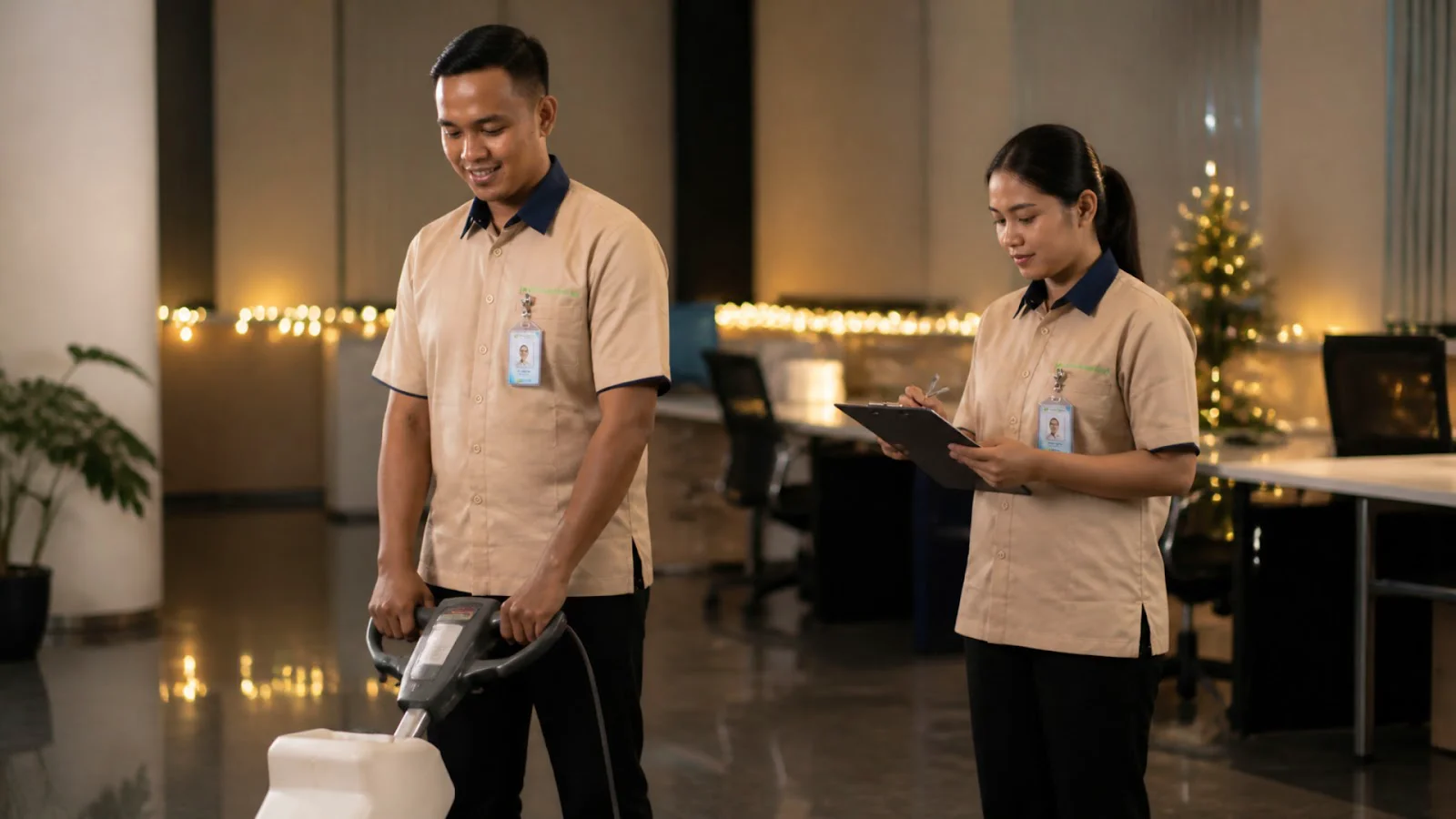
Deep cleaning protocol and cleaning shift management during the year-end holiday: critical building cleaning points and standby staff scheduling.
November 23, 2026