Company Profile
About UsCareers
Job OpeningsHead Office
Gedung Pegadaian Kenari Lantai 4
Jl. Salemba Raya No.2, Kel. Kenari,
Kec. Senen, Kota Jakarta Pusat 10430
Copyright © 2026 PT Pesonna Optima Jasa. All Rights Reserved.
Follow Us
Gedung Pegadaian Kenari Lantai 4
Jl. Salemba Raya No.2, Kel. Kenari,
Kec. Senen, Kota Jakarta Pusat 10430
 November 23, 2026

Parking areas support daily company activity. Employees, guests, suppliers and business partners use them to park before entering the workplace, and this high mobility calls for planned parking security management.
Poor management can cause vehicle theft, loss of items inside cars, vehicle damage and disputes over parking spaces. Congestion can also block operational vehicles and emergency routes. Companies need to combine parking rules, officer supervision, vehicle records and entry and exit lane arrangements. Professional security guards help keep order and watch for activity that may disrupt security.
Every parking area has a different risk level, so companies should understand potential problems based on vehicle count, site layout, operating hours and user characteristics.
Vehicles parked for long periods can attract offenders, especially when the area has dark spots or little supervision. Valuables visible from outside also raise theft risk. Companies should check lighting, fences, access points and spots not covered by cameras, while security officers patrol regularly and watch for unusual activity.
Without clear checking procedures, unauthorized people can enter and exploit weak supervision. Officers need to distinguish employee, guest, supplier and operational vehicles. Companies can use parking cards, registered vehicle lists or digital records as needed.
Irregular use of parking spaces can trigger disputes between employees or with visitors, often when areas are not divided or signage is inadequate. Management should set usage rules, place visible signs and define a complaint procedure, while officers direct vehicles according to the rules.
Vehicles stopped carelessly can block ambulances, fire trucks and other vehicles needing quick access. Companies should mark emergency routes and ban parking there, and officers should monitor compliance and quickly ask owners to move blocking vehicles.
Companies can improve parking security through mutually supporting steps. Management should set easy-to-understand procedures and make sure officers apply them consistently.
Clear lanes help control vehicle flow. Where land allows, separate entry and exit lanes to cut queues and make movement easier to supervise. Management should also decide inspection points, waiting areas and turning points, with clear signage so drivers understand directions. Companies with heavy deliveries should consider dedicated lanes for trucks and logistics vehicles to reduce conflict with private vehicles and keep distribution smooth.
Vehicle records help companies recognize parking users. Data may include plate number, driver identity per policy, purpose of visit, and entry and exit times. Companies can choose manual or digital recording by vehicle volume, but officers must follow the same procedure so records stay consistent. Management should also restrict access to vehicle data to legitimate operational needs.
Officers should inspect the parking area regularly to spot suspicious vehicles, open vehicle doors, damaged facilities and other conditions needing attention. Patrol routes should follow area size and risk level, and important findings should be recorded so the coordinator can evaluate and decide follow-up. Extra checks can be arranged when vehicle numbers rise or during special events.
Adequate lighting helps officers observe activity, especially at night. Companies should regularly check lights, cameras, fences, markings and signs. Dark or obstructed areas create hard-to-supervise points, so management can add lighting, rearrange layouts or reposition cameras. Clear markings, well-kept surfaces and adequate pedestrian paths also reduce accident risk.
Companies should define what officers do when they find theft, accidents, vehicle damage or disputes, so they can respond in an organized way without making things worse. Officers should record time, location, chronology, parties involved and initial actions, and know when to contact the coordinator, management, emergency services or authorities. Incident reports help find root causes; if similar events keep occurring at one point, management can evaluate the layout or increase supervision.
Guards do more than watch the main gate: they help arrange vehicles, inform visitors, supervise facilities and respond to disturbances. They should communicate politely but firmly, for example asking guest vehicles to use a special area, reminding drivers not to block pedestrian paths or directing logistics vehicles to loading areas. Officers must also understand their authority limits; in disputes they keep the situation calm and follow escalation procedure. Companies should brief them on parking layout, evacuation routes, recording procedures and handling problem vehicles.
Technology supports physical supervision and helps manage vehicle flow in an orderly way. Choose devices based on site needs and the company's management capability.
• Surveillance cameras: help officers monitor entry points, vehicle lanes and areas needing attention, and help review incident chronology. Place cameras strategically, check them routinely, limit access to footage to authorized parties and follow privacy rules.
• Parking cards and identification systems: help distinguish permitted vehicles from visitors. High-mobility sites can consider automatic identification or digital records. These speed up checks, but officers must still watch the situation and know alternative procedures when the system fails.
• Communication systems: radios let officers pass information fast, for example when finding a vehicle blocking an emergency route, without leaving their post. Companies should set communication channels, report codes if needed and clear escalation paths.
Companies with large parking areas or high mobility need consistent supervision, and self-management can be hard when attention must be split with core business. Through security workforce outsourcing, companies can work with a provider to meet personnel needs per site conditions, discussing officer numbers, area division, patrol patterns, reporting procedures and service standards before cooperation begins. Companies should still supervise results, evaluating officer discipline, report accuracy, communication quality and procedure compliance.
Companies should assess provider experience, personnel competence, coaching system and the coordinator's ability to supervise the field. The provider should understand site characteristics such as multi-level parking, office buildings, distribution centers or industrial estates. Before cooperation, share area maps, estimated vehicle counts, peak hours and points needing special supervision, so the provider can plan services more precisely. Also make sure the provider has a clear reporting mechanism, since consistent reports help management judge effectiveness and decide improvements.
Parking management needs disciplined officers who communicate well and understand security procedures. Companies should make sure every officer knows their responsibilities so supervision runs alongside operations. Optimajasa provides security services to support company and workplace security needs, and companies can discuss parking area characteristics, vehicle volume, activity patterns and personnel needs to determine a suitable service. To learn more about professional corporate security services, visit the official Optimajasa Security page:
Gedung Pegadaian Kenari Lantai 4
Jl. Salemba Raya No.2, Kel. Kenari,
Kec. Senen, Kota Jakarta Pusat 10430
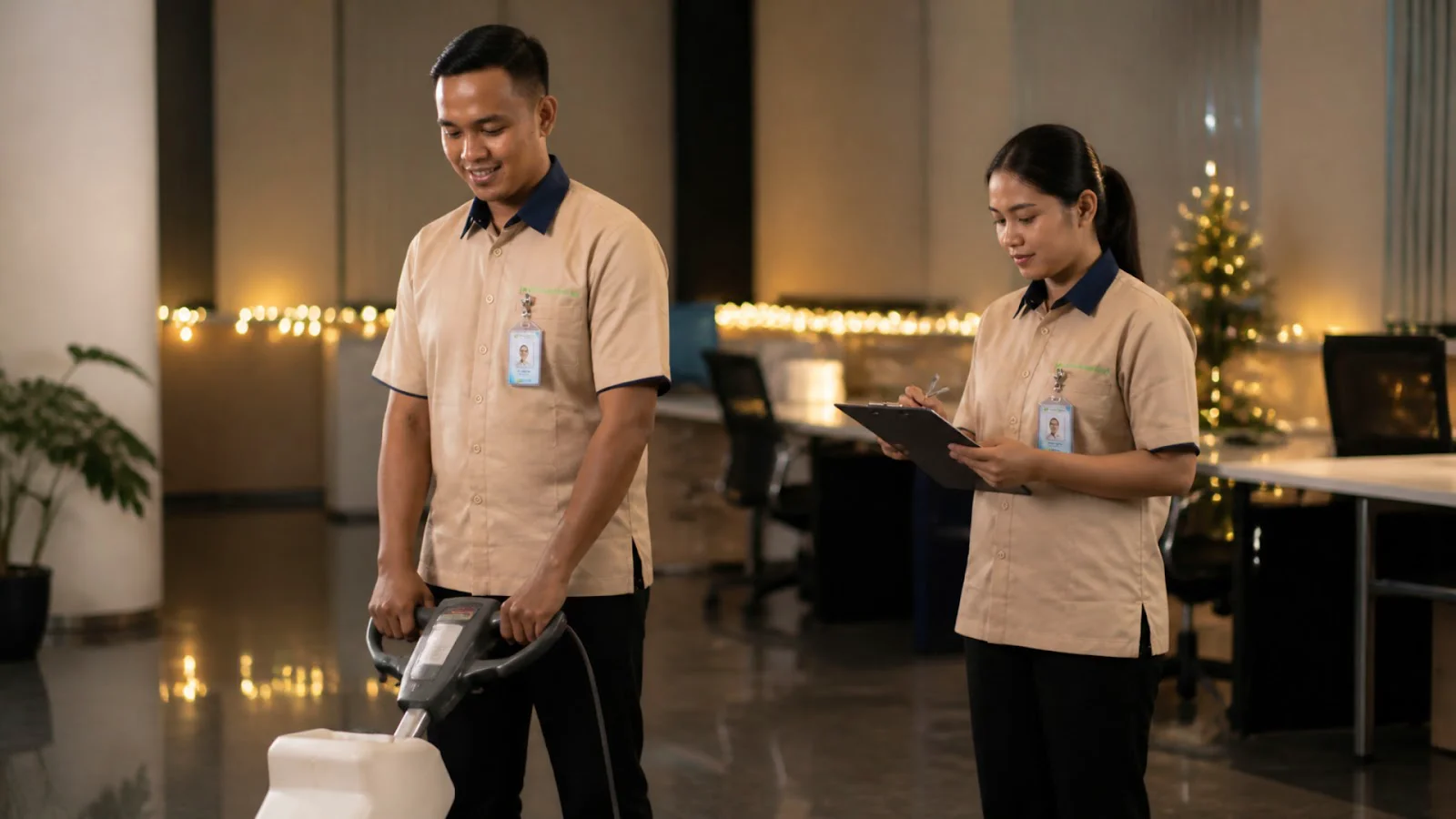
Deep cleaning protocol and cleaning shift management during the year-end holiday: critical building cleaning points and standby staff scheduling.
November 23, 2026