Company Profile
About UsCareers
Job OpeningsHead Office
Gedung Pegadaian Kenari Lantai 4
Jl. Salemba Raya No.2, Kel. Kenari,
Kec. Senen, Kota Jakarta Pusat 10430
Copyright © 2026 PT Pesonna Optima Jasa. All Rights Reserved.
Follow Us
Gedung Pegadaian Kenari Lantai 4
Jl. Salemba Raya No.2, Kel. Kenari,
Kec. Senen, Kota Jakarta Pusat 10430
 November 23, 2026
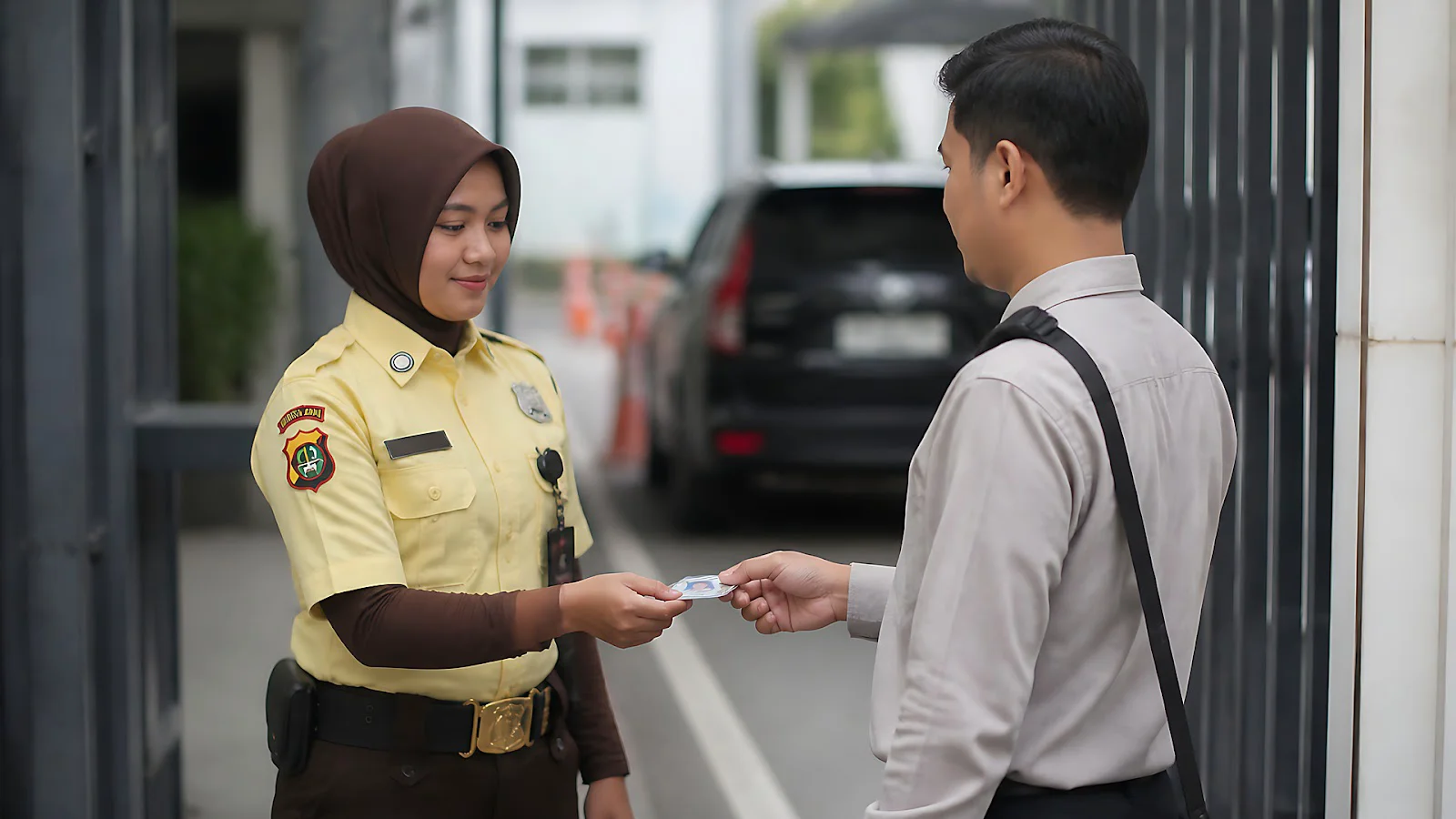
Every company must control the access of people and vehicles entering work areas. Guest reception, goods deliveries, business partner visits and employee mobility can create security risks without clear procedures, which makes access management a key part of protecting assets and keeping operations smooth. Companies can build an orderly access system by combining administrative procedures, supporting technology and professional security officers, which helps recognize visitors, check the purpose of arrival and make sure everyone follows the rules. Access management also reduces the potential for theft, intrusion, asset damage and disruption of work. With professional security guard services, companies can guard entrances, supervise visitor movement and handle situations that need immediate attention.
Poorly organized access control opens the door to disturbances, so companies need to understand these risks to plan suitable prevention.
Visitors without a clear purpose can enter operational areas if officers do not check identity and intent. This may disrupt employees, expose internal information or endanger people on site. Officers must make sure every guest states identity, visit purpose and who they want to meet, and for restricted areas they need approval from the responsible person before granting access.
Companies with warehouses, factories, head offices or distribution centers must watch vehicle flow, since visitor cars, operational vehicles and cargo trucks need different checks. Without consistent procedures, companies risk lost goods, gate congestion and misuse of parking. Officers should record vehicle identity, arrival time, purpose and other information per company policy.
Access cards that change hands let others enter certain rooms. Companies should apply individual-use rules and ask employees to report lost cards. Officers should also watch for unusual behavior, such as someone following an employee through an access door without showing identity, which helps prevent facility misuse.
Companies do not need complicated technology at first. A start can be made with procedures, division of responsibility and consistent supervision.
Define the guest flow from arrival to departure. Officers can ask for identification, record the visit purpose, contact the employee hosting the guest and issue a visitor card if used. Visitors must understand which areas they may visit, and rooms with confidential documents, important devices or high-value goods should be limited to authorized parties. Clear procedures let officers serve guests warmly without neglecting security, balancing guest comfort with protection of the work environment.
Companies with heavy logistics should arrange vehicle routes by function: guest vehicles, employee cars, delivery trucks and emergency vehicles need different space so they do not block each other. Officers must know the site layout, checkpoints, parking areas and evacuation routes and direct drivers by the rules so vehicles stay out of prohibited areas. This reduces gate congestion, and with several entrances, management should define each gate's function.
A guest book records visits simply, but companies with many visitors can consider digital registration for faster recording and searching. It can hold visitor name, required identity, host, arrival time and exit time. Restrict access to this data and apply storage policies in line with applicable data protection rules. Technology does not replace officers, who still verify information, watch the field and act on discrepancies.
Each part of a company has a different risk level: reception, meeting rooms, warehouses, server rooms and document storage need different controls. Group areas by importance and define who may enter. Officers then check at each access point according to the rules, focusing more on locations holding high-value assets or supporting key business processes.
Incident records help evaluate security effectiveness. Officers should write reports when they find mismatched identity, unauthorized vehicles, suspicious items or visitors trying to enter restricted areas, including time, location, chronology, officer action and who received the information. Companies should also set reporting lines so officers know whom to contact, which speeds coordination and reduces miscommunication.
An access management system needs officers who run procedures with discipline and communicate well: checking identity, guiding visitors, arranging vehicles and recognizing conditions that need action. Through security workforce outsourcing, companies work with providers who help manage personnel according to site characteristics, so management can focus on core business. Companies still need to set service standards, explain access rules and evaluate officer performance regularly, with coordination between company management, security managers and the provider.
Before cooperating, assess the provider's experience, personnel competence, supervision system and understanding of the client's operational needs. A good provider explains reporting mechanisms, personnel replacement, coaching and complaint handling. Ask about training that supports security duties, such as communication, situation control, procedure knowledge and emergency readiness. Companies should also agree on measurable performance indicators, for example accuracy of visitor logs, procedure compliance, incident report quality and response to disturbances.
Good procedures need consistent execution, so every officer must understand access rules and apply them in different situations. Training can cover identity checks, guest communication, vehicle traffic control, use of communication devices and actions when the access system fails, and scenario simulations let officers practice without disturbing operations. Management should evaluate through visitor log checks, incident report reviews and inspections at entry points, using results to improve workflows, add signage or adjust headcount. Update procedures when layouts change, facilities are added or visitor volume grows.
Companies can strengthen access management with surveillance cameras, ID cards, door access systems, intercoms and communication devices, chosen to fit needs and budget. Cameras help officers monitor entry points and strategic areas, access cards limit movement by authority, and communication devices speed coordination between gate officers, reception and responsible staff in the building. Technology brings optimal benefit only when officers know how to operate it and management follows up on the information produced. Companies with several sites can also use centralized monitoring to get an overview of security conditions and align procedures across locations.
Companies that want stronger access control can consider professional security personnel support. Such cooperation helps arrange personnel needs, build clear work procedures and keep supervision consistent in operational areas. Optimajasa provides security services through personnel management that supports company needs and the work environment, and companies can discuss site characteristics, visit patterns, operational risks and supervision needs to determine a suitable service form. To learn more about corporate security services, visit the official Optimajasa Security page:
Gedung Pegadaian Kenari Lantai 4
Jl. Salemba Raya No.2, Kel. Kenari,
Kec. Senen, Kota Jakarta Pusat 10430
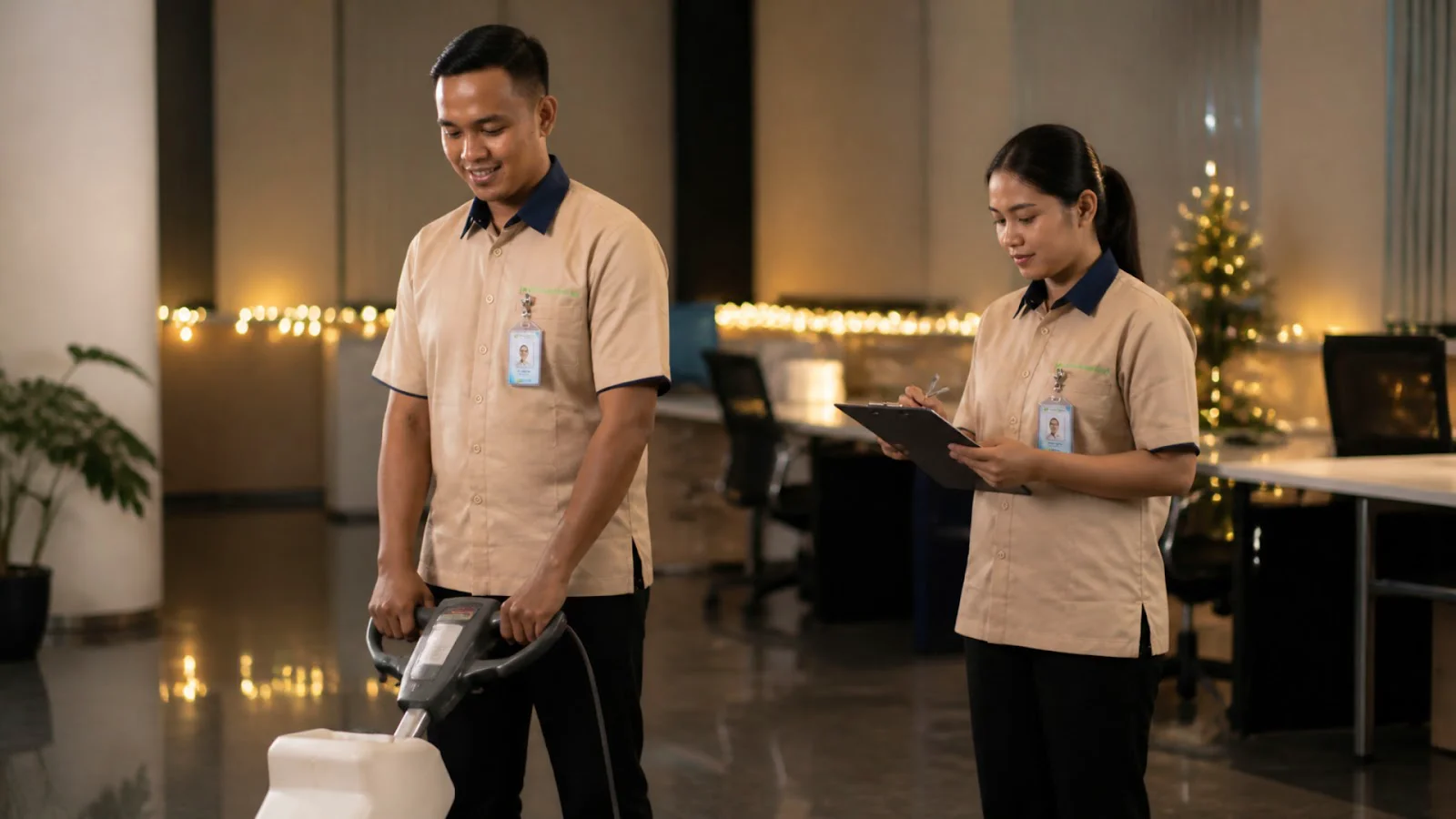
Deep cleaning protocol and cleaning shift management during the year-end holiday: critical building cleaning points and standby staff scheduling.
November 23, 2026