Company Profile
About UsCareers
Job OpeningsHead Office
Gedung Pegadaian Kenari Lantai 4
Jl. Salemba Raya No.2, Kel. Kenari,
Kec. Senen, Kota Jakarta Pusat 10430
Copyright © 2026 PT Pesonna Optima Jasa. All Rights Reserved.
Follow Us
Gedung Pegadaian Kenari Lantai 4
Jl. Salemba Raya No.2, Kel. Kenari,
Kec. Senen, Kota Jakarta Pusat 10430
 November 23, 2026
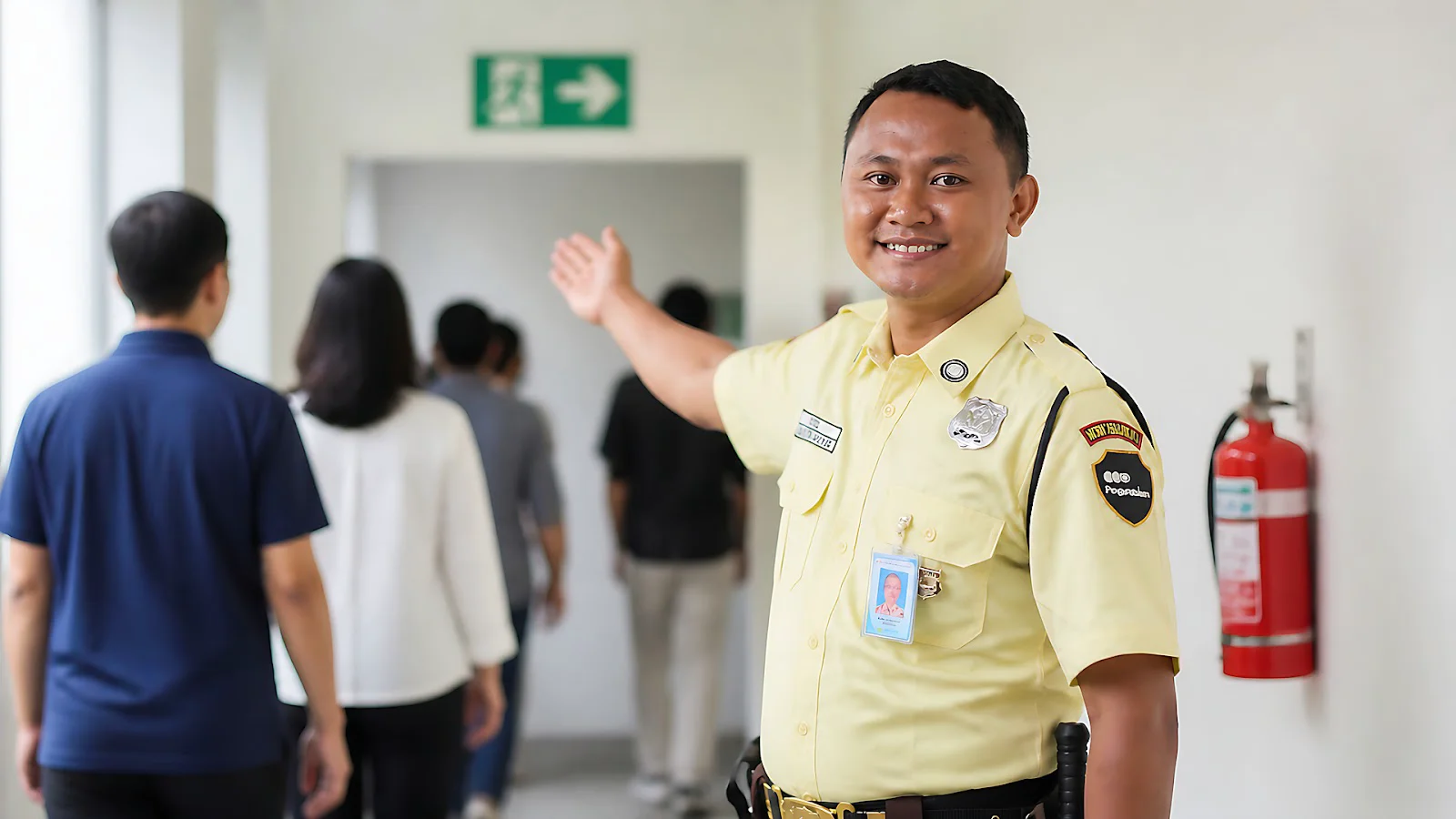
Corporate security is not only about preventing theft or supervising work areas. Companies also need security personnel who can respond to emergencies quickly, in an organized way and according to procedure. Fires, power outages, workplace accidents and other situations threatening employee safety need good coordination between security officers and management.
Through company security guard outsourcing, businesses can manage their security workforce needs in a more structured way. Companies should choose providers that pay attention to personnel competence, discipline, communication and understanding of workplace safety procedures.
Emergencies can arise without clear warning, and security officers are often among the first to receive a report or notice signs of danger while on duty. Guards who understand emergency procedures help the company take the right first steps: passing information to the relevant parties, directing people to evacuation routes, keeping access open for emergency responders and helping prevent panic. Preparedness also supports business continuity, because an organized response helps management understand the situation faster and decide follow-up actions based on accurate information.
Companies need officers who handle routine duties and also understand their responsibilities during an emergency. Several roles deserve attention.
Officers should watch environmental conditions on patrol and spot early signs such as smoke, a burning smell, damaged cables, goods blocking evacuation routes or activity that could endanger occupants. When they find suspicious conditions, they must report them to the responsible party at once per company procedure, so the relevant team can inspect before the problem becomes a bigger incident.
Every building or operational site needs clear evacuation routes. Officers should know where emergency doors, evacuation stairs and assembly points are, and which access the emergency team can use. This lets them give accurate directions to employees, visitors and others on site. Companies must also keep evacuation routes free of goods, vehicles or equipment that block movement.
In an emergency, unclear information slows handling. Officers should report the location of the incident, type of threat, area condition and help needed to the authorities. Concise communication helps management, the safety team and emergency responders grasp the situation without wasting time, and companies should set communication lines and an emergency contact list so everyone knows whom to call.
During an incident, unrelated people should stay away from hazardous locations. Guards can direct occupants to safe areas, keep access routes clear and prevent people from entering risky locations. However, officers must put their own safety first and stay within their competence and applicable procedure. For a fire, they should prioritize warning, evacuation and coordination with emergency responders, and use firefighting equipment only if properly trained and the situation allows.
Companies should integrate preparedness into daily security management. Placing guards at entrances or operational areas is not enough: management must also build procedures that are easy to understand and train personnel regularly.
Procedures should explain division of responsibility, reporting lines, evacuation mechanisms and who has authority to decide. Use clear instructions so officers know what to do under pressure, and adapt procedures to the site: office buildings, warehouses, production facilities and commercial areas have different hazards and need suitable approaches.
Drills help personnel learn procedures through hands-on practice. Companies can run evacuation and emergency communication drills together with the occupational safety team, building managers and other responsible parties. After each drill, evaluate every stage to find obstacles, for example officers struggling to reach the responsible person, occupants not knowing assembly points or evacuation routes needing rearrangement. Results become the basis for improving the next procedure.
Companies should check communication devices, alarm systems, emergency lighting, evacuation signs and other equipment according to each party's responsibility. Officers should know how to report damage or conditions that hinder readiness. Routine checks help find problems before an emergency happens, and management can set inspection schedules and records so each finding gets clear follow-up.
Vendor selection should weigh more than headcount and service cost. Companies should assess the recruitment process, briefing, discipline, communication skill and officers' understanding of security and safety procedures. Certification and training are also important: Gada Pratama, Gada Madya and Gada Utama qualifications each have their own level and function in the security profession, and companies should make sure personnel competence matches the responsibilities and needs of the site. Also choose a professional provider able to coordinate with management; regular communication helps the company evaluate task execution, convey procedure changes and improve service quality over time.
Optimajasa provides security workforce services through professional personnel management. Optima Security System also integrates security services with the Security Command Center (SCC) to support security coordination across Indonesia. This approach can help companies manage security needs in offices, business buildings and operational sites. Companies should still adapt emergency procedures to site characteristics, workplace safety rules and coordination with authorities. To learn more about services suited to your operational needs, visit the Optimajasa security outsourcing page:
Gedung Pegadaian Kenari Lantai 4
Jl. Salemba Raya No.2, Kel. Kenari,
Kec. Senen, Kota Jakarta Pusat 10430
Deep cleaning protocol and cleaning shift management during the year-end holiday: critical building cleaning points and standby staff scheduling.
November 23, 2026