Company Profile
About UsCareers
Job OpeningsHead Office
Gedung Pegadaian Kenari Lantai 4
Jl. Salemba Raya No.2, Kel. Kenari,
Kec. Senen, Kota Jakarta Pusat 10430
Copyright © 2026 PT Pesonna Optima Jasa. All Rights Reserved.
Follow Us
Gedung Pegadaian Kenari Lantai 4
Jl. Salemba Raya No.2, Kel. Kenari,
Kec. Senen, Kota Jakarta Pusat 10430
 November 23, 2026
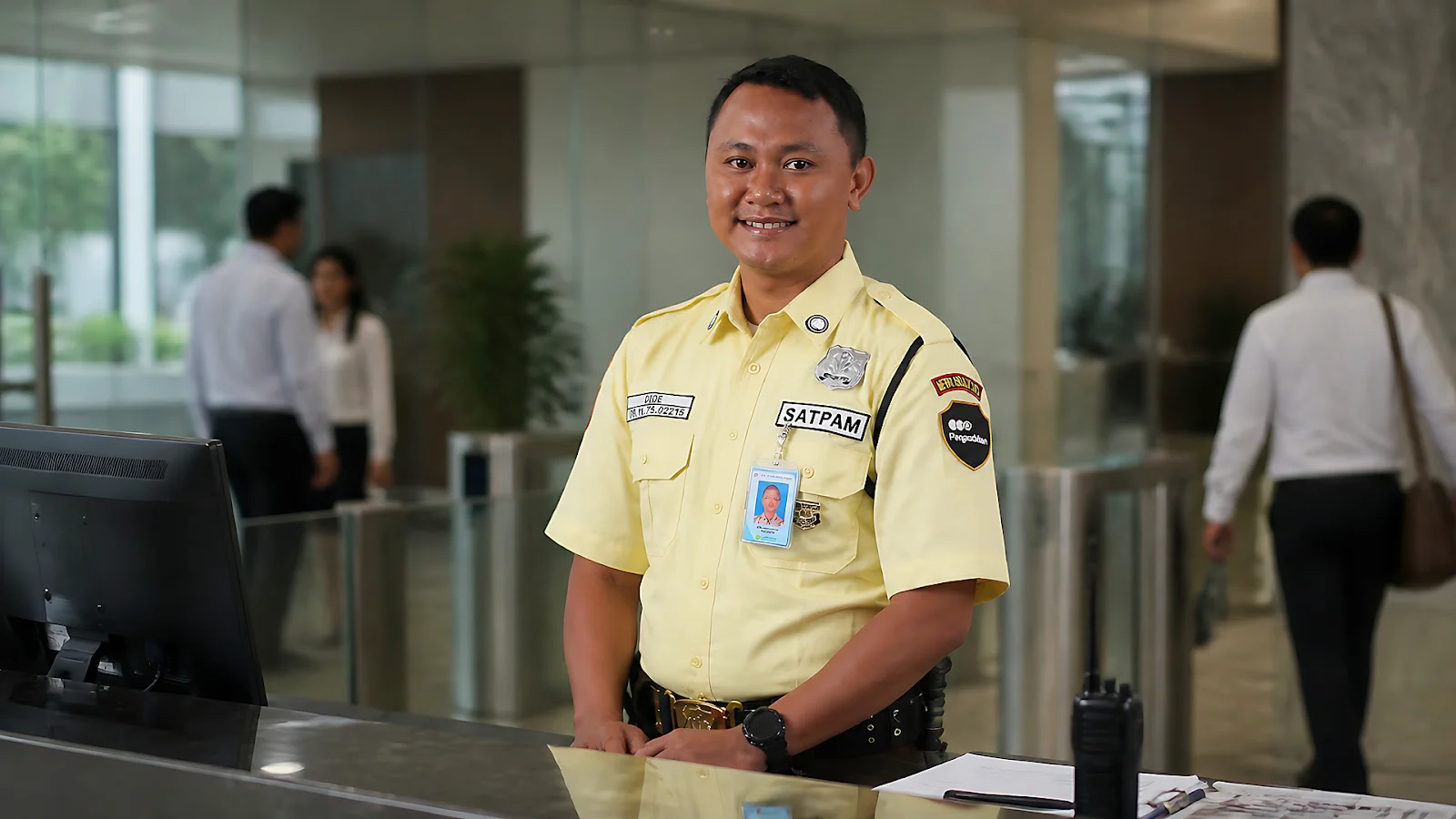
Office buildings are hubs of business activity, from client meetings to document handling and asset storage. Every day employees, guests, partners, couriers and operational staff pass through several access points, so building managers need a security system that keeps order without hurting productivity. Good security does not rely only on a guard at the entrance: managers must arrange guest reception procedures, supervise restricted areas, control vehicle access, run patrols and set clear communication when disturbances occur. In this context, Optimajasa Security Outsourcing can be one option for companies looking for professional security personnel to arrange guarding, manage staffing and support security procedures within the cooperation scope.
Before deciding on security staffing, managers should understand the site so they can set supervision priorities and place personnel accordingly.
The lobby is the first point where visitors meet the company. Officers manage guest flow, check identity per procedure, guide visitors and coordinate with reception. Clear guest procedures control access without unnecessary queues, and officers need to understand visiting rules to give accurate information.
Parking needs supervision of vehicle movement, space use and access to certain facilities. Officers help keep order and report activity that deviates from building rules. Managers can define entry and exit routes, special parking zones and procedures for operational vehicles to reduce confusion.
Archive rooms, server rooms, storage rooms and certain administrative areas may need access limits. The company must decide who may enter. Officers must understand access rules and follow inspection procedures, with coordination with facility managers and IT helping protect areas that hold important assets.
Evacuation routes need special attention because they support occupant safety in emergencies. Officers should know emergency door locations, assembly points, fire extinguishers and communication lines with the emergency response team. Managers should check the routes regularly and make sure daily activity does not block them.
Building security services help managers apply supervision procedures across areas: guarding, monitoring activity, managing access and reporting within their responsibility. Managers should give clear instructions: lobby officers focus on guest reception, parking officers help arrange vehicles and patrol officers inspect areas along set routes. Dividing tasks avoids overlapping responsibility, and communication lines let officers ask for help when a situation exceeds their authority. Professional, friendly yet firm conduct toward occupants creates a safe and comfortable environment.
Offices hold computers, documents, communication devices and business information. Companies must control access to work areas and make sure every visitor follows procedures. Office security covers access checks, visit records, patrols and incident reporting, and officers can guide guests to meeting rooms and remind visitors of workplace rules. Companies should set procedures for couriers, goods deliveries and after-hours visits, and coordinate with HR, facility management and IT so officers understand access limits, activity schedules and incident procedures.
Consider personnel quality, supervision system and the provider's ability to adapt service to the building.
• Check officer competence and certification: relevant certification, work experience, communication skills and procedure knowledge, plus how the provider coaches and briefs personnel before duty.
• Evaluate the supervision system: field inspection, attendance monitoring, discipline evaluation and complaint follow-up, with scheduled evaluation meetings to resolve issues.
• Check contract clarity: headcount, job descriptions, work patterns, service standards, cost components, officer replacement and who is responsible when operational issues arise.
Managing guards in-house means recruitment, administration, scheduling, coaching and performance evaluation. A company that wants to focus on core business can work with a security outsourcing company, where the provider supplies personnel under the contract while the client still defines needs, sets service standards and evaluates results. Possible benefits:
• More directed personnel management based on building size, number of access points and daily activity.
• Clear division of responsibility through a contract covering task scope, reporting procedures and coordination.
• Support for performance evaluation using agreed indicators such as discipline, procedure compliance and report quality.
• Planning flexibility when facilities are added, operating hours change or business expands, per the cooperation terms.
These benefits depend on provider quality, contract clarity and consistent evaluation, so companies should still check before choosing a partner.
Officers need procedures that are easy to understand and apply; without guidelines each officer may handle similar situations differently. Managers can write procedures for guest reception, access checks, vehicle arrangement, patrols, incident recording and emergency handling, each stating officer responsibilities and communication lines. Shift handover matters: the outgoing officer passes on site conditions, unfinished incidents and items needing attention. Managers should also review regularly, since layout changes, new tenants or more visitors can change the security pattern.
Technology supports building security through monitoring cameras, access control systems, communication devices and digital reporting. Managers should define each device's function so it genuinely helps officers. Monitoring helps operators recognize conditions needing attention, but field officers still check situations directly and follow procedures. Companies also need rules on access to recordings and security information to protect confidentiality while supporting incident investigation. Coordination between officers, monitoring operators and management is key.
Companies need objective indicators: attendance accuracy, report completeness, supervision results, access rule compliance and follow-up of field findings. Evaluation meetings with the provider discuss problems, and each finding should lead to a clear corrective step with a responsible party and deadline. This builds a measurable evaluation system, with clear direction for the provider and results-based assessment for management.
Companies needing security personnel should choose a provider that understands site characteristics and operational needs, discussing headcount, task scope, supervision patterns, reporting procedures and expected service standards. Optimajasa Security Outsourcing can be an alternative for companies wanting to discuss building and office security needs, starting from the actual site conditions and guarding needs. Before deciding, review service scope, personnel qualifications, supervision system and contract terms. For more information about Optimajasa security services, visit the official page:

Gedung Pegadaian Kenari Lantai 4
Jl. Salemba Raya No.2, Kel. Kenari,
Kec. Senen, Kota Jakarta Pusat 10430
Deep cleaning protocol and cleaning shift management during the year-end holiday: critical building cleaning points and standby staff scheduling.
November 23, 2026