Company Profile
About UsCareers
Job OpeningsHead Office
Gedung Pegadaian Kenari Lantai 4
Jl. Salemba Raya No.2, Kel. Kenari,
Kec. Senen, Kota Jakarta Pusat 10430
Copyright © 2026 PT Pesonna Optima Jasa. All Rights Reserved.
Follow Us
Gedung Pegadaian Kenari Lantai 4
Jl. Salemba Raya No.2, Kel. Kenari,
Kec. Senen, Kota Jakarta Pusat 10430
 September 30, 2026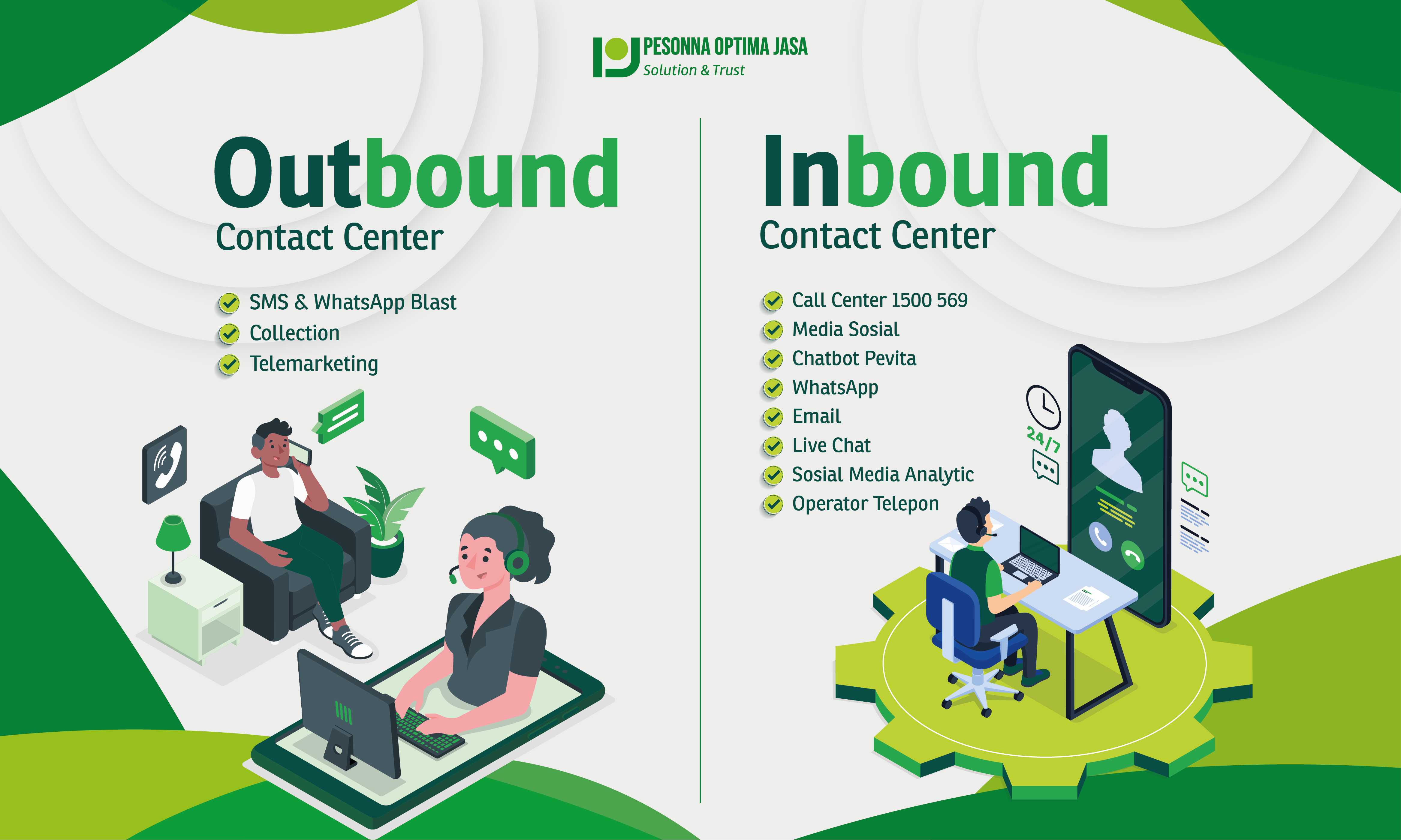
In the call center industry, there are two main types of calls: outbound calls and inbound calls. Each serves different functions and provides different benefits depending on a company’s business objectives and strategy.
This article explains the differences between outbound and inbound calls to provide a clearer understanding of how each type works.
An outbound call is a type of call in which a call center agent proactively contacts customers or potential prospects. Here are several important aspects of outbound calls:
1. Agent-Initiated Communication
Outbound calls are initiated by call center agents. Agents contact customers or potential prospects to promote products or services, collect information, conduct surveys, or schedule appointments.
2. Message Control
During outbound calls, call center agents have greater control over the message being delivered. They can prepare predefined scripts or communication guidelines to help maintain consistency and improve the effectiveness of each interaction.
3. Sales and Marketing
Outbound calls are commonly used for sales and marketing purposes. Call center agents may contact customers to introduce new products, invite them to promotional events, provide information about special offers, or support other marketing initiatives.
An inbound call occurs when a customer or potential prospect contacts a call center to request information, assistance, or support. Here are several important aspects of inbound calls:
1. Responsive Communication
Inbound calls involve responding to calls received by the call center. Agents are responsible for answering questions, providing assistance, and helping resolve issues experienced by customers.
2. Customer-Initiated Requests
In inbound calls, customers or potential prospects determine the reason for contacting the company. They may request information about products or services, place an order, ask for assistance, or report a problem they are experiencing.
3. Customer Service
Inbound calls are commonly associated with customer service. Call center agents may provide solutions, offer technical support, handle complaints, or direct customers to the appropriate department based on their needs.
The main differences between outbound and inbound calls can be summarized as follows:
Outbound calls are proactively initiated by call center agents, while inbound calls are received from customers or potential prospects.
Outbound calls are commonly used for sales, marketing, surveys, and other proactive communication, while inbound calls are primarily associated with customer service and information requests.
Outbound calls allow agents to prepare and control the message being delivered, while inbound calls require agents to respond to the customer’s specific needs or concerns.
Outbound calls are driven by the initiative of the call center agent or company, whereas inbound calls are initiated by customers or potential prospects.
Outbound and inbound calls serve different purposes within call center operations. While outbound calls involve agents proactively contacting customers, inbound calls focus on responding to customers who contact the company for information or assistance. Understanding these differences can help companies develop more effective communication strategies, improve call center operations, and provide better customer experiences.

Gedung Pegadaian Kenari Lantai 4
Jl. Salemba Raya No.2, Kel. Kenari,
Kec. Senen, Kota Jakarta Pusat 10430
Indonesia's Job Creation Law covers employment, worker protection, investment, and skills development. Some provisions may create opportunities for employment and career development, while its implementation and impact remain subjects of public and legal
September 30, 2026